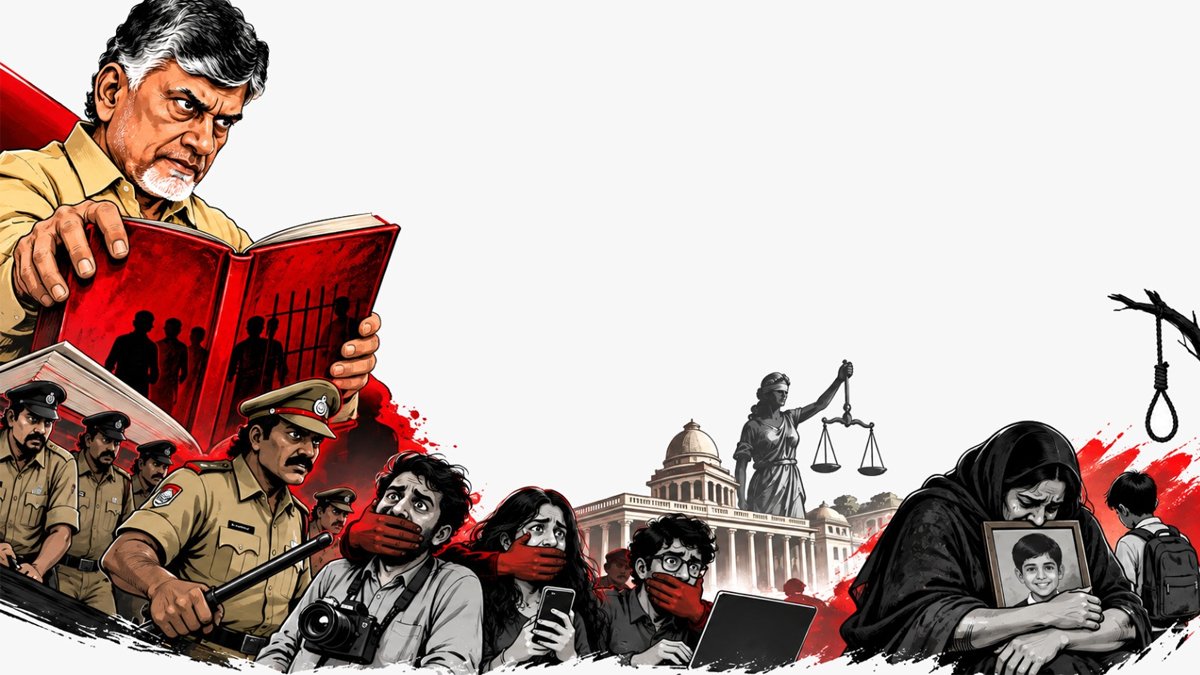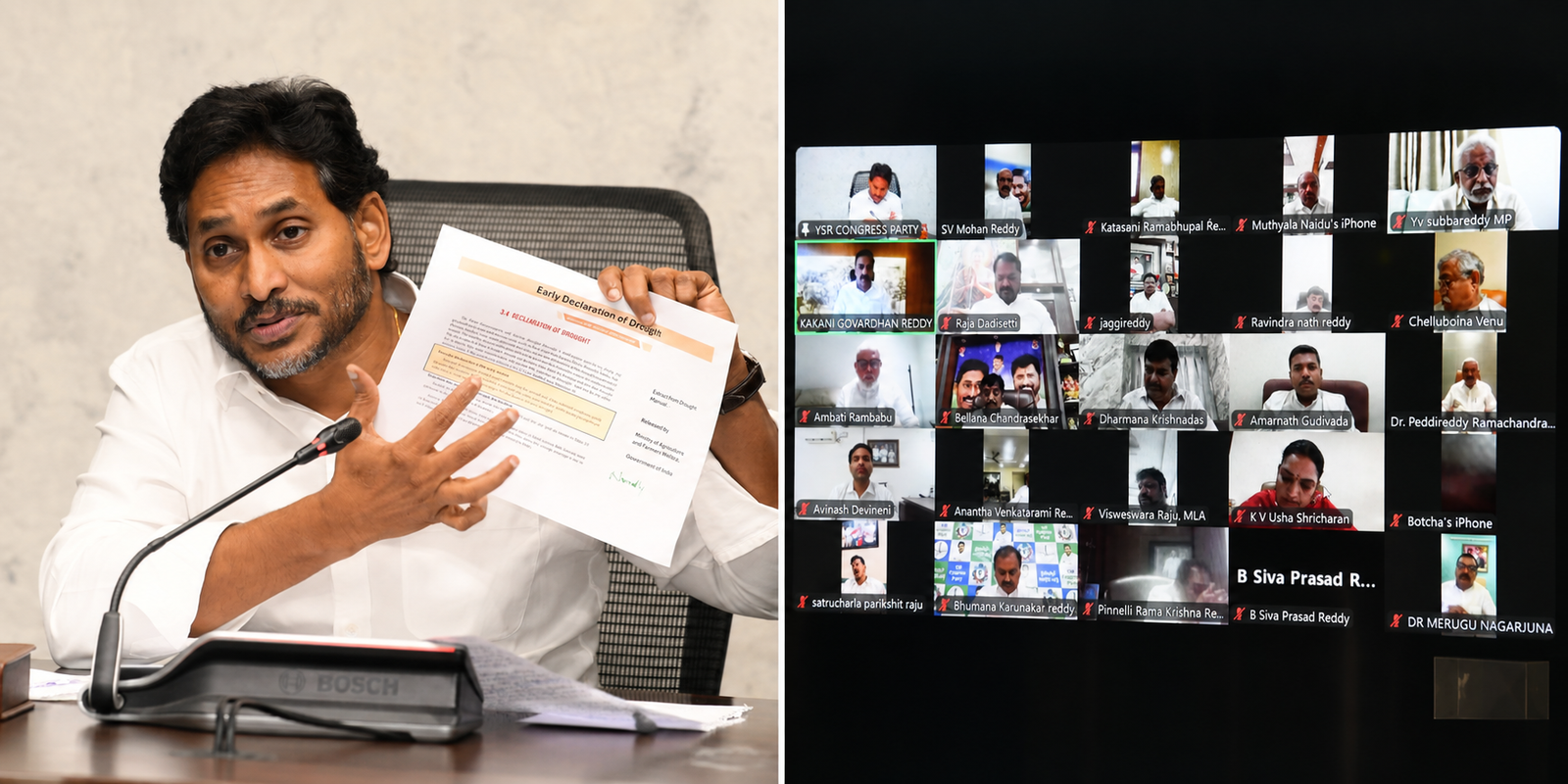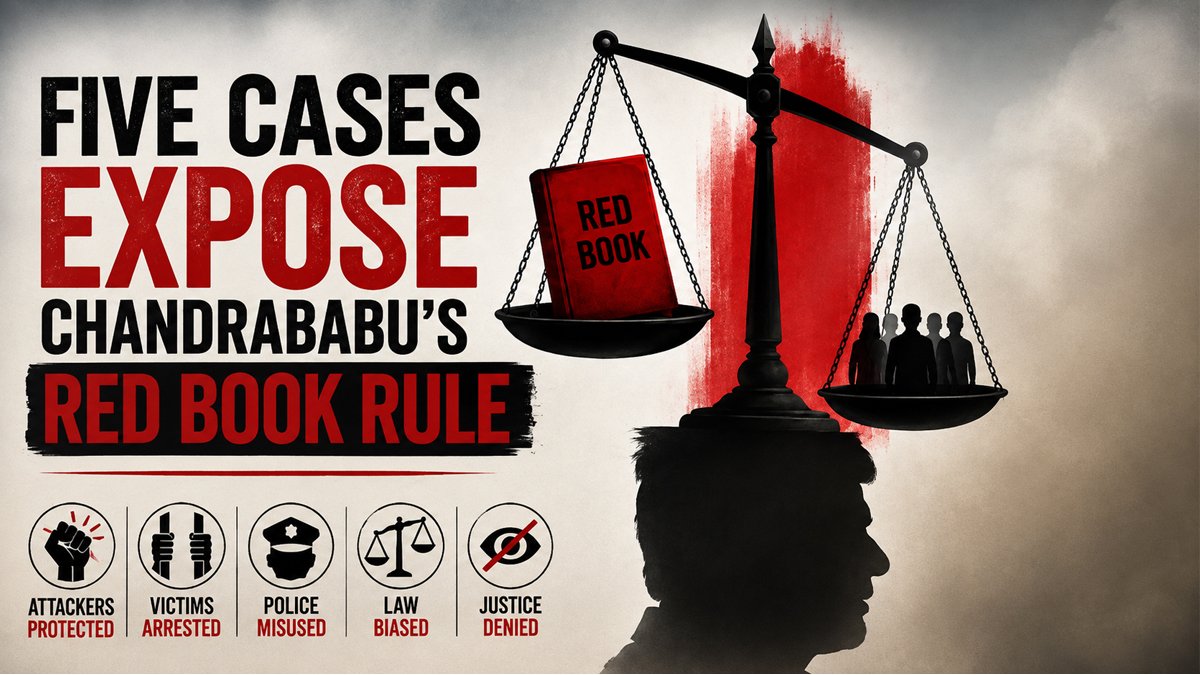
- Lawlessness has reached its peak under Narasura rule
- Protection for attackers, criminal cases against victims as part of political vendetta
- Attempt-to-murder cases being filed against the victims themselves
- Police turning complainants into accused persons
- MLA arrested after doors were broken open at midnight
- Serious charges imposed on 21 people based on a short video clip
- FIR altered three days after an ordinary road accident
- Similar incidents, but different police action depending on the political party involved
- Abuse of power clearly visible in all five incidents
- Is the Constitution being implemented in the State, or Red Book lawlessness?
- YSRCP raises these questions with supporting evidence
Is the law in Andhra Pradesh being implemented in accordance with the Constitution of India, or is a new law being enforced to suit Chandrababu Naidu’s political needs? If those who carry out attacks belong to the TDP, they receive police protection. If those attacked belong to the YSRCP, counter-cases are filed against them. If elected representatives stand by the victims, cases are registered against them as well. Those who question the government are arrested, and those who confront it face midnight raids in which their doors are broken open. Is this democracy? Is this justice? Is this the rule of law? These questions are being raised across the State.
Under Chandrababu’s rule, whether a crime actually occurred is no longer important. Police action now appears to depend on whom the government wants to portray as an accused, whom it wants to politically harass and whom it wants to intimidate.
This Is Chandrababu-Style Law
Even when a complaint supported by evidence is filed against a ruling-party leader, no FIR is registered. When an allegation is made against an Opposition leader, the arrest comes first and the investigation later. If a video involves a TDP leader, it is ignored. If a short video clip involves a YSRCP leader, it is distorted and used to invoke serious criminal provisions.
A kidnapping case is filed against a YSRCP leader who handed a person over to the police. But when a complaint is lodged stating that men linked to a ruling-party leader attempted a kidnapping, no case is registered. If a road accident involves the family of a YSRCP leader, the sections are changed and arrests follow. If the same kind of accident involves a TDP leader, it is closed as an ordinary case.
This is not governance that respects the law. It is Chandrababu-style law, implemented to suppress the Opposition and protect the ruling party.
Case Study–1
What Happened in the Nemakallu Incident?
TDP cadres attacked the house of a YSRCP worker in Nemakallu village of Chippagiri mandal. Fearing for his life and the safety of his family, the worker made a video call to Alur MLA Virupakshi and pleaded for immediate protection.
As the worker had sought help in fear of his life, MLA Virupakshi immediately went there and consoled the victim’s family. However, TDP workers attacked the MLA and YSRCP workers in the presence of the police. The MLA’s brother, Sriramudu, was also injured in the attack.
Conspiracy to File a False Case by Tearing His Own Wife’s Sari
Videos have surfaced showing that TDP worker Nagaraju deliberately tore his own wife’s sari with malicious intent.
Although the facts are clearly visible in the videos, a false complaint was lodged claiming that MLA Virupakshi, his son Chandrasekhar, and YSRCP leaders and workers had abused a Dalit woman and pulled her sari.
Instead of examining the video evidence and establishing the truth, the police acted under political pressure and turned the victims themselves into accused persons.
Serious Cases Filed Against 34 People
Cases were registered against 34 people in connection with the incident, including MLA Virupakshi and his son Chandrasekhar.
Attempt-to-murder charges were filed. Provisions of the SC/ST Act were invoked, along with several other serious sections. The MLA and his son were arrested and remanded. The Chandrababu government’s political vendetta is evident from the fact that no action was taken against the TDP workers who carried out the attack, while the MLA who was attacked and the YSRCP leaders who stood by the victims were arrested.
Midnight Raid on the MLA’s Residence
A large police force raided Alur MLA Virupakshi’s residence at 2:45 a.m. The doors were broken open, and the MLA and his son Chandrasekhar were arrested. Police also took away the CCTV hard disks from the residence.
Were the hard disks removed to prevent the public from seeing how the doors were broken open, how the family members were terrorised and how the MLA was arrested? The seizure of evidence by the very police who are responsible for preserving it has raised several serious suspicions.
The Injustice Done to Mala Gangamma in the Same District
While a democratically elected MLA’s residence was raided at midnight by a large police force, the government did not respond with the same urgency when serious charges were raised against the police in the Mala Gangamma case in the same Kurnool district.
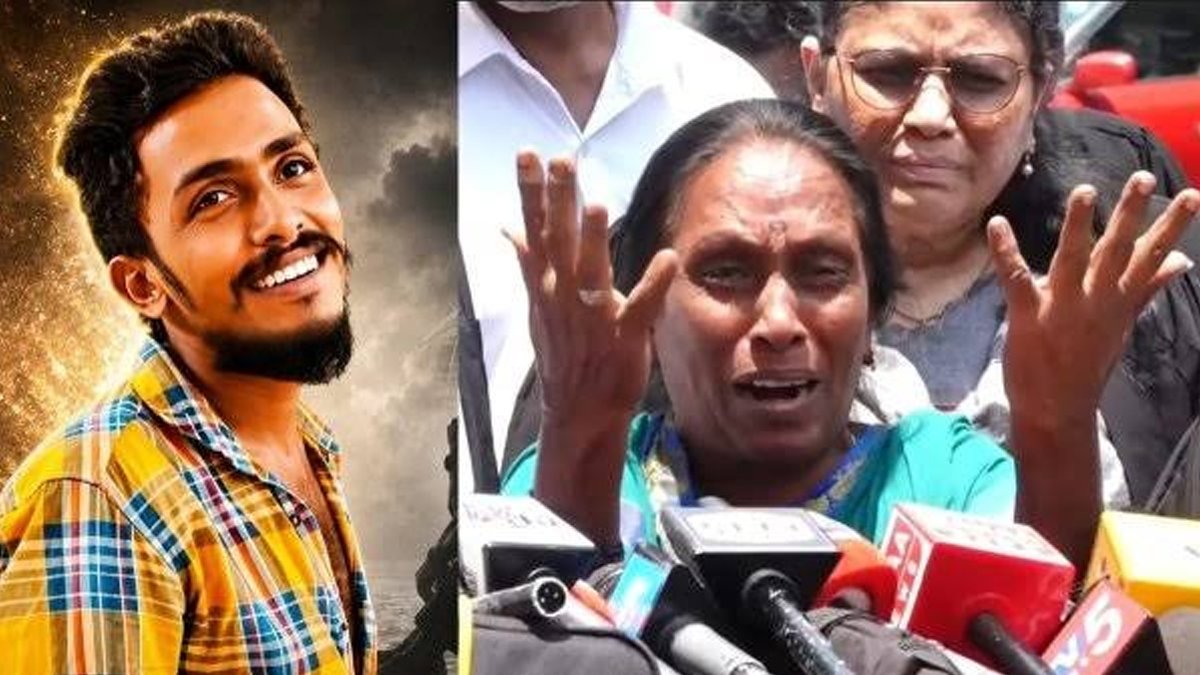
Mala Gangamma approached the police after her son went missing. Instead of tracing her son and delivering justice, the police themselves took the mother into custody, according to the charges raised by her family.
Family members stated that Gangamma was illegally detained at the Adoni DSP’s office from May 26 to May 31 and tortured by SIT officers, who pressured her to disclose details relating to her son’s body. They said Gangamma died because she could not withstand the police torture. Dargayya, who was detained along with her, also suffered serious injuries, the family stated.
There were also charges that Gangamma’s body was buried hurriedly on the same day in the presence of police, without giving her relatives and family members a proper opportunity to participate.
Two Incidents, Two Different Laws
In Virupakshi’s case, an attempt-to-murder case was filed against the MLA who was attacked. SC/ST charges were imposed on those who stood by the victims. Cases were registered against 34 people. Doors were broken open at midnight, arrests were made and CCTV hard disks were seized.
In Mala Gangamma’s case, however, the mother who complained that her son was missing was herself detained. Serious charges were raised that she died due to police torture and that her body was buried in haste. Yet no immediate or transparent action was seen against those responsible.
This case study reveals Chandrababu-style law: protection for TDP workers when they attack, and criminal cases against YSRCP victims.
Videos exposing the false case have surfaced, yet there is no justice for the victims. Even when grave charges of torture, illegal detention and death are raised against the police, the same urgency and severity are absent.
A massive midnight police operation is launched to arrest an Opposition MLA, but accountability is ignored even when an ordinary woman loses her life.
This is Chandrababu-style law: protection for the attackers and cases against the victims—one form of justice for the ruling party and another for the Opposition.
Case Study–2
Kidnapping Case Against Former Guntur East MLA Mustafa
Government Turns the Victim into an Accused After He Approaches Police for Justice
What Was the Original Business Dispute?
Former Guntur East MLA Shaik Mohammed Mustafa is engaged in the tobacco business. He paid money in advance to a trader for the purchase of tobacco. Mustafa’s associates stated that the trader received the money but failed to supply the goods as agreed. They said he attempted to evade repayment while also refusing to deliver the tobacco.
In this situation, the person concerned was caught along with the lorries being used to transport the tobacco and was handed over to the Pedakakani Police Station.
Kidnapping Case for Handing a Person Over to Police
The person was not secretly detained at an undisclosed location by anyone taking the law into their own hands. He was taken directly to the police station and handed over to the police.
The police were responsible for examining the business transaction, the advance payment and the failure to supply the goods, and for delivering justice to the aggrieved party. Instead, the police registered a kidnapping case against Mustafa and his son. YSRCP stated that serious provisions, including attempt to murder, were subsequently added to the case.
What kind of justice is it to file a kidnapping case when the person was handed over to the police? Who kidnapped a person who was present inside a police station? What were the time and place of the claimed kidnapping, and where was he confined? Were the records relating to the business transaction examined? The government must answer these basic questions.
No Case Despite Complaint of an Attempted Kidnapping
Businessman Madala Srinivas lodged a police complaint stating that an attempt had been made to kidnap him. He stated that persons connected to Deputy Speaker Raghurama Krishnam Raju tried to abduct him and that he had submitted supporting evidence to the police.
He said the dispute arose after he purchased Ind-Bharat assets connected to Raghurama Krishnam Raju in an auction during 2022–23. He stated in his complaint that he was threatened not to provide any information to the SIT investigating Raghurama Krishnam Raju’s financial dealings and that the attempted kidnapping was part of that intimidation.
YSRCP questioned why no case had been registered on the complaint so far. It stated that police instead accepted complaints from the very persons facing kidnapping charges and placed pressure on the victim.
Two Complaints, Two Different Police Responses
In Mustafa’s case, the person involved in the business dispute was handed over to the police station. Yet a kidnapping case was registered against Mustafa, his son was also included, and serious provisions such as attempt to murder were later added.
In Madala Srinivas’s case, he directly complained to the police about an attempted kidnapping, named persons connected to a prominent ruling-party leader and stated that he had provided evidence. Yet no FIR was registered.
This case study exposes Chandrababu-style law: a YSRCP leader faces a kidnapping case even after handing a person over to the police, while a complaint of attempted kidnapping against persons connected to the ruling party does not even result in an FIR.
The police converted a business dispute into a political case. For the government, the central question is not whether a crime occurred, but against whom the complaint was made.
Case Study–3
Attempt-to-Murder Case Against Chintada Ravikumar
Large numbers of people, party leaders and workers gathered during Y.S. Jagan Mohan Reddy’s visit to Srikakulam district.
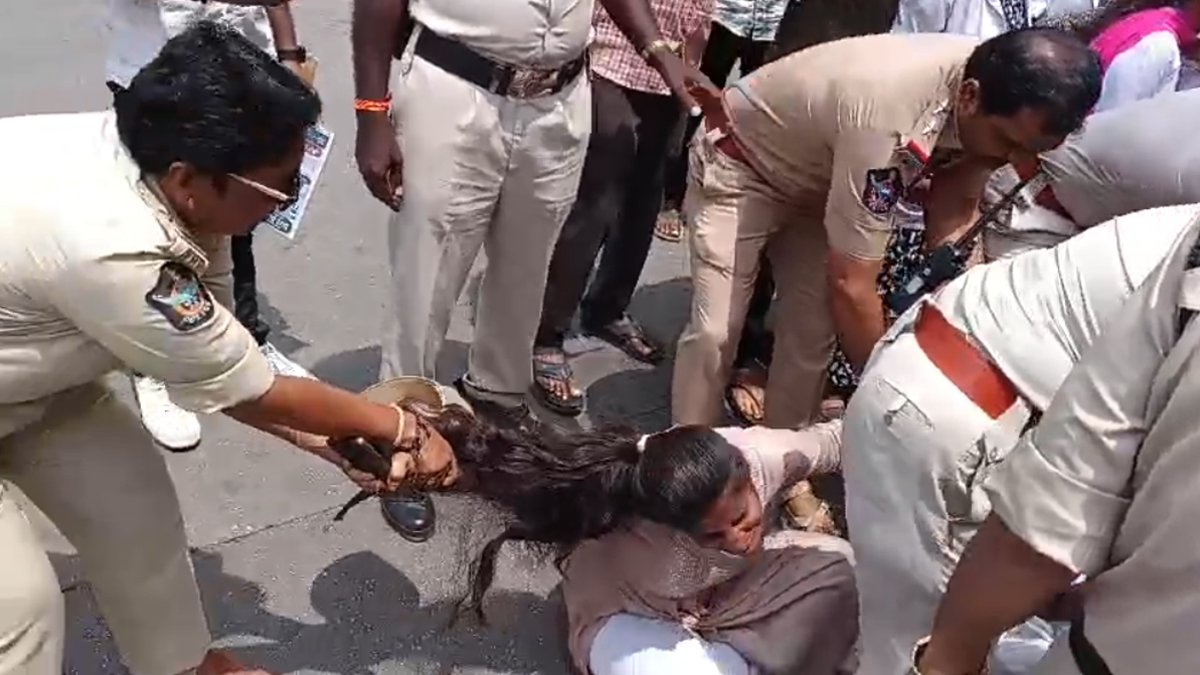
As a huge crowd formed, Amadalavalasa YSRCP Coordinator Chintada Ravikumar gave instructions to the woman Sub-Inspector on duty regarding crowd control, prevention of a stampede and clearing a route for the leaders’ vehicles. Instead of showing the entire incident, a short video clip lasting only a few seconds was taken and distorted. A false narrative was created to portray an incident that never occurred, and serious charges were levelled against Chintada Ravikumar.
Serious Sections, Including Attempt to Murder
Based on the short video clip, cases were registered against 21 people, including Chintada Ravikumar. Several serious sections, including attempt to murder, were invoked.
The case did not include only political leaders. Advocates, former servicemen, businessmen, students and farmers were also named. YSRCP stated that cases were filed after preparing a list without even conducting a basic verification of who actually participated in the incident and where each person was at the time.
Cases Against People Who Were Not at the Scene
- Daneti Ramamohana Rao, named as A-8, is an advocate. Records show that he remained in court until 2 p.m. on the day of the incident. Yet, he was included in the case.
- Gurugubilli Tejeswara Rao, named as A-9, was not even in Andhra Pradesh that day. He had travelled to Punjab to admit his daughter to a university. Despite the availability of travel records, a case was registered against him.
- Nanu Patruni Suresh, named as A-11, is a licensed document writer. He was present throughout the day at a protest held outside the Amadalavalasa Sub-Registrar’s Office. Even then, he was included as an accused.
The inclusion of people who were not present at the scene raises a basic question: was this an impartial investigation, or were the names decided first and the case constructed later?
Government Frightened by the Public Response
YSRCP stated that the government was frightened by the massive public turnout when Y.S. Jagan visited Srikakulam district to console the family of former Minister Seediri Appalaraju. Unable to tolerate the success of Jagan’s visit, the government filed cases against the leaders and workers who participated in the programme to intimidate them.
Cases are filed when leaders go among the people. Cases are filed when people meet Opposition leaders. Cases are filed when the government is questioned. Cases are filed when anyone supports the Opposition. Is this democratic governance, or a police state?
Why Was No Action Taken Against Koona Ravikumar?
On the other hand, a woman filed a complaint against a ruling-party MLA. YSRCP stated that a KGBV principal complained that TDP MLA Koona Ravikumar, from the same Amadalavalasa constituency, had been harassing her. She also stated that he subjected her to sexual harassment.
What did the government do when a woman officer made such serious charges against a ruling-party MLA? Was a case registered on her complaint? Was her statement recorded independently? Was an inquiry conducted against the MLA? YSRCP stated that the government took no action.
Two Incidents, Two Different Laws
In Chintada Ravikumar’s case, a video clip lasting only a few seconds was used as the basis for action. Serious provisions, including attempt to murder, were invoked. Twenty-one people were included in the case. Even those who were not present at the scene were shown as accused. Advocates, farmers, students and former servicemen were also implicated.
In the complaint against the TDP MLA, however, a woman principal raised charges of harassment and sexual misconduct. Yet, no case was registered with the same urgency. No investigation of equal intensity was conducted, and no similarly stringent sections were invoked.
This case study exposes Chandrababu-style law: a short video involving an Opposition leader results in an attempt-to-murder case, while the list of accused is prepared according to political requirements rather than the facts. This is Chandrababu-style law.
Case Study–4
Government Turns a Road Accident into a Serious Criminal Case for Political Vendetta
A shepherd died in a road accident on July 10. The police initially registered an FIR over the accident. A young man named Siddhartha, who was stated to have driven the vehicle, surrendered before the police. Based on the sections initially registered, he was released on station bail. Until this stage, the police treated the incident as an ordinary road accident.
Yellow Media Campaign Two Days Later
YSRCP stated that, two days after the incident, Yellow media began broadcasting stories targeting former Minister Seediri Appalaraju. It said the facts of the accident were pushed aside and a malicious campaign was launched against Appalaraju’s family.
The party questioned why the police changed their approach immediately after the media campaign began. Why was a case initially registered as an ordinary accident altered three days later?
What New Evidence Was Found?
What new facts emerged during the investigation? Were the sections changed on the basis of fresh evidence, or under political instructions?
On July 13, the police altered the sections in the case. A case that initially permitted station bail was converted into a serious criminal case. Seediri Appalaraju’s son was subsequently arrested, followed by the arrest of former Minister Seediri Appalaraju.
Vendetta Against the Family of a BC Fishermen Leader
Seediri Appalaraju is a leader from the BC fishermen community and served as a Minister in the YSRCP government.
YSRCP stated that, unable to confront him politically, the government dragged his family into criminal cases. It said the arrest of the son first and the father later was part of a conspiracy to damage the family mentally and politically.
Was the Political-Conspiracy Angle Investigated?
Charges were raised that the son of Pathapatnam MLA Mamidi Govinda Rao caused an accident, but the driver was shown in his place and the case was closed.
Did the government conduct a comprehensive inquiry into these charges? Did it examine CCTV footage, mobile-location data and forensic evidence to establish who was driving the vehicle? Why was the urgency shown against Seediri Appalaraju’s family not seen in cases involving the families of ruling-party MLAs?
Three Accidents, Three Different Standards
In Seediri Appalaraju’s case, the matter was initially registered as a road accident. After the Yellow media campaign, the sections were changed. His son was arrested first, followed by the former Minister.
In the accident connected to the Ichchapuram MLA, an elderly man died after being hit by the vehicle in which the MLA was travelling. Yet the urgency displayed in the Seediri case was absent.
In the incident involving the son of the Pathapatnam TDP MLA, charges were raised that the MLA’s son caused the accident but the driver was substituted in his place.
This case study exposes Chandrababu-style law: when an accident involves the family of a YSRCP leader, the sections are changed and arrests follow. When it involves a ruling-party leader, it ends with an ordinary investigation.
When Yellow media publishes stories, even the nature of the police FIR changes. Similar incidents attract different sections, different arrests and different investigations depending on the political party involved.
This is Chandrababu-style law.
Bias Proven in All Five Incidents
These five incidents reveal one common truth. In the Virupakshi case, the MLA who was attacked and the leaders who stood by the victims were turned into accused persons. In the Mala Gangamma case, serious charges of illegal detention and torture were raised against the police after a mother complained that her son was missing. In Mustafa’s case, a kidnapping case was filed against the leader who handed a person over to the police station. In Chintada Ravikumar’s case, a short video clip was distorted and 21 people, including those who were not present at the scene, were implicated. In Seediri Appalaraju’s case, what was initially registered as a road accident was later converted into a serious criminal case, leading to the arrest of both father and son.
These are not merely five separate incidents. They are five examples of the same political policy being implemented under the Chandrababu government.
Where Are the Answers to Gen-Z’s Questions?
The Opposition states that a conspiracy is underway to divert public attention from pressing issues.
The Gen-Z youth of the State are strongly questioning the government:
- Why has no CBI inquiry been ordered into the irregularities in DSC-2025?
- Why has Education Minister Lokesh not resigned, taking responsibility for the irregularities?
- Why has the government failed to release the ₹9,500 crore pending under the Vidya Deevena and Vasathi Deevena schemes?
- Why were young people deceived after being promised an unemployment allowance of ₹3,000 per month?
- When will the government pay the ₹1.08 lakh due to each unemployed youth for three years?
Chandrababu and Lokesh have no answers to these questions. That is why cases are being filed against Opposition leaders, midnight arrests are being carried out and police excesses are being used to divert public attention.
YSRCP’s Demands
- A judicial inquiry must be ordered into the midnight police raid on the residence of Alur MLA Virupakshi.
- The CCTV hard disks taken away by the police must be preserved under court supervision.
- Legal action must be taken against the TDP leaders and workers who carried out the attack.
- An independent investigation must be conducted into the charges of illegal detention, torture and death in the Mala Gangamma case.
- The cases registered against Mustafa and his son must be reviewed impartially.
- A case must be registered and investigated in accordance with law on Madala Srinivas’s complaint.
- An inquiry must determine why persons who were not present at the scene were included in the Chintada Ravikumar case.
- The same law and the same standards must be applied without distinction between the ruling party and the Opposition.