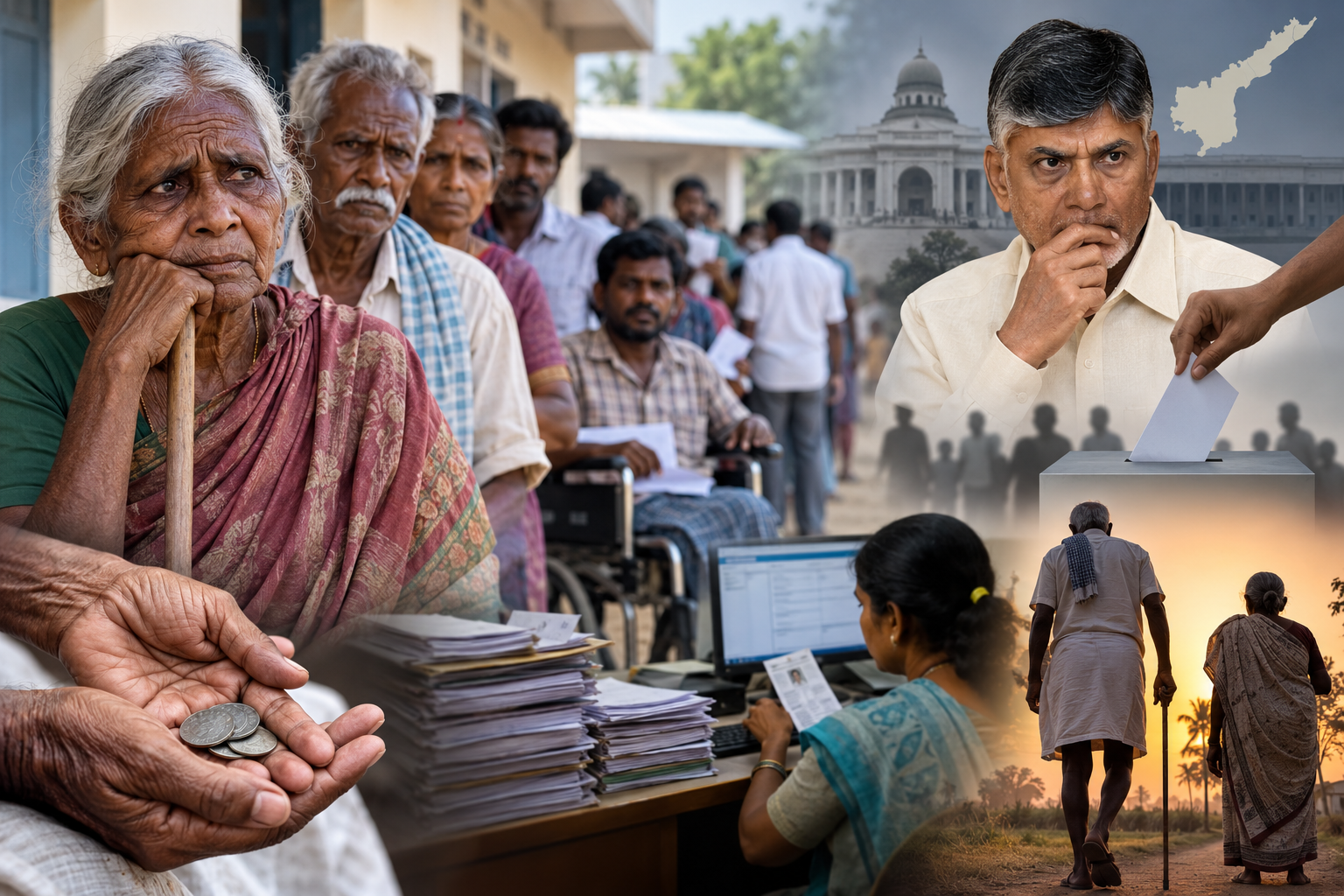
The Chandrababu Naidu-led coalition government is facing growing criticism over its treatment of unemployed youth and students who are demanding jobs, recruitment notifications, higher stipends and transparency in the Mega DSC-2025 process. Instead of addressing their grievances, the government is being charged with using police cases, surveillance, raids on coaching centres and force against peaceful protesters. The larger question now confronting the government is simple: has demanding a job or questioning recruitment irregularities become a crime in Andhra Pradesh?
Police action against job aspirants
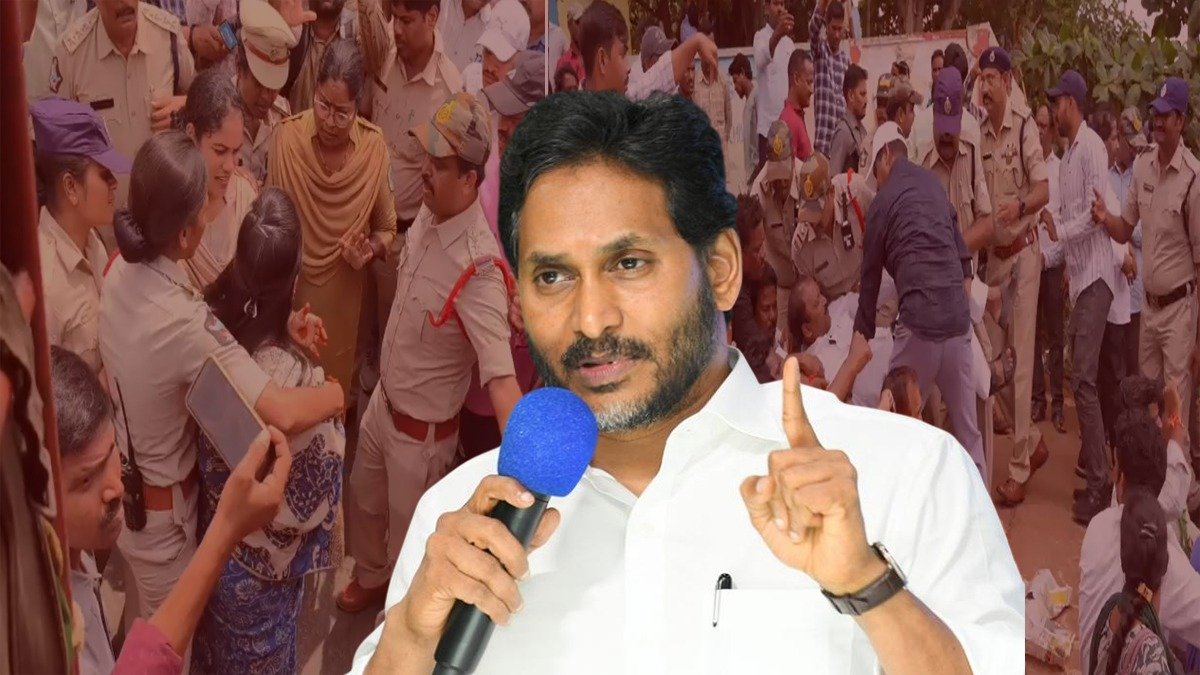
On September 7, thousands of police job aspirants took out a rally in Kakinada demanding a comprehensive notification to fill vacancies in the Police Department. Instead of responding to their demand, police action followed. Officers later visited Shyam Institute and hostels where unemployed youth were staying, collected details of participants and registered cases against the coaching-centre organiser and around 20 others. The episode has raised serious questions over why young people taking part in a peaceful employment rally should be subjected to police scrutiny and cases that could affect their future.
Coaching centres under the scanner
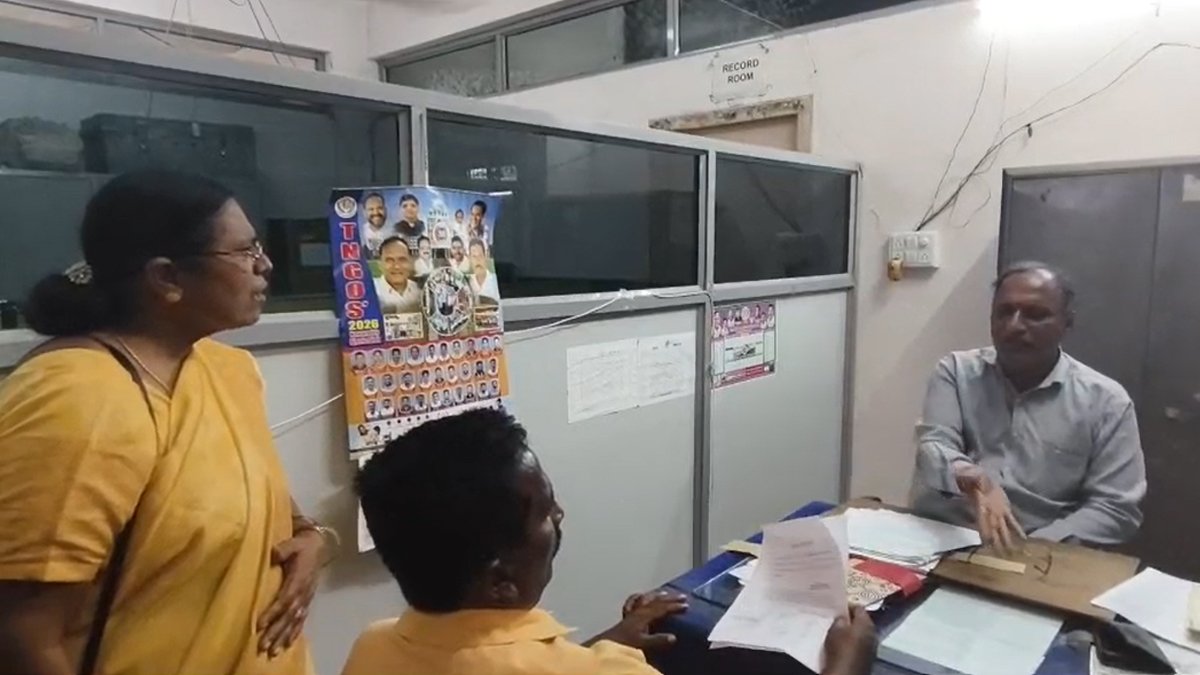
Coaching institutes that train unemployed youth are also being subjected to scrutiny. Police reportedly visited hostels, collected Aadhaar details and phone numbers and questioned whether the participants had joined protests voluntarily or were mobilised by others.
The growing scrutiny has triggered concerns that institutions helping job aspirants are being treated as potential centres of political mobilisation rather than educational institutions.
Force against paramedical students
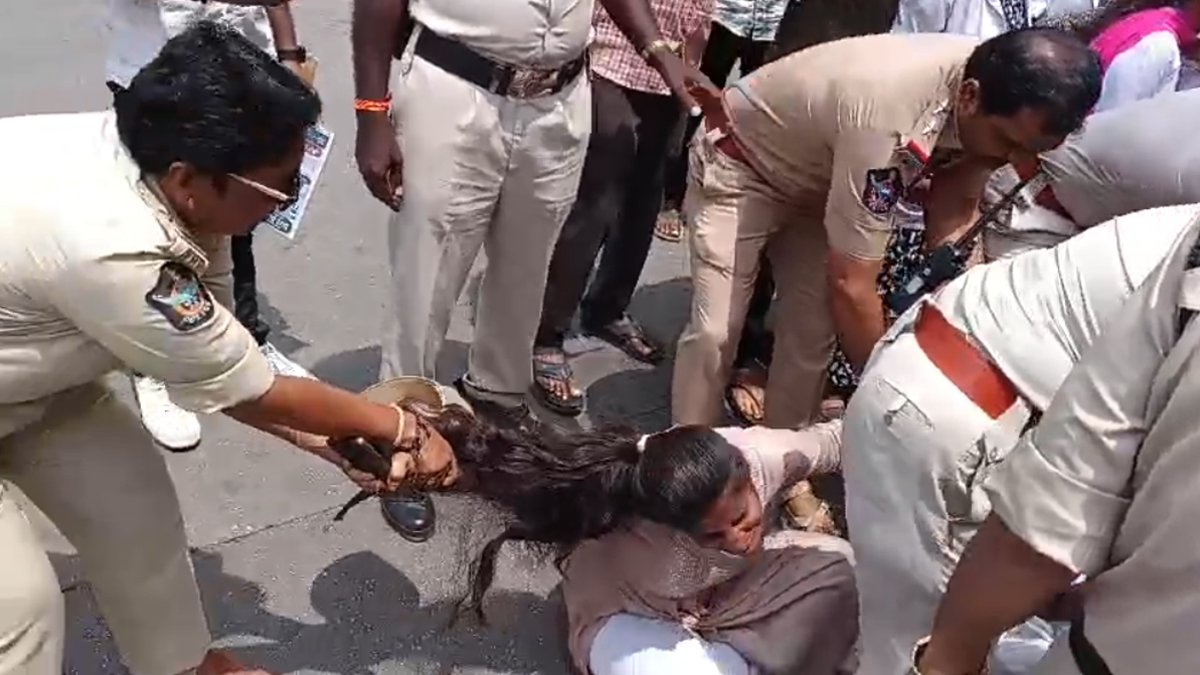
In Tirupati, students pursuing B.Sc Medical Laboratory Technology and allied health courses protested against being made to work for 12 hours without adequate compensation and demanded a monthly stipend of ₹15,000. During the protest, a woman ASI was seen dragging a female protester by her hand, neck and hair towards a police vehicle. The incident became another example cited by critics of the government’s approach towards student protests. The students were not demanding luxuries. Their demand was for a reasonable stipend and dignity for their work.
Why is the government afraid of Gen-Z?
Unemployed youth are asking for jobs. Police aspirants are demanding recruitment notifications. Paramedical students are seeking stipends. DSC candidates are asking for transparency. None of these are extraordinary demands. Yet the repeated deployment of police against youth movements has raised the question of why ministers are not engaging with the protesters directly and answering their concerns.
Questions remain over Mega DSC
The Mega DSC-2025 sports-quota selections have generated serious doubts among candidates. Officials themselves have stated that a vigilance inquiry is examining the selection of 21 candidates from one mandal on the basis of judo certificates, including seven reportedly belonging to one family. The validity of certain judo certificates is also under consideration before the High Court. The government has offered explanations regarding TET qualifications, community certificates and sports credentials in some cases. But when crucial certificates remain under vigilance scrutiny, critics are questioning how the entire recruitment process can be declared clean before the inquiry is completed. Demands have therefore grown for a comprehensive and independent investigation into the sports quota, eligibility disputes, certificate verification and possible influence in selections.
Demand for Lokesh to take responsibility
Protests have also been held demanding a CBI inquiry into the DSC recruitment and seeking Education Minister Nara Lokesh’s resignation.
Critics argue that where serious questions affecting lakhs of teacher aspirants remain unresolved, the minister should accept political responsibility and step aside until an impartial investigation is completed. The note also draws a comparison with the NEET controversy, arguing that accountability at the highest level should apply equally in Andhra Pradesh when questions are raised over a major recruitment process.
Cases cannot replace jobs
A government elected by the people is accountable to them. Asking for implementation of election promises, criticising policy, holding a peaceful protest, participating in a rally or expressing an opinion on social media are all part of democratic politics. If public dissatisfaction is increasing, the answer is to resolve the underlying problems, not to identify, monitor and prosecute those expressing them. The concern now is that opposition leaders face cases, journalists face pressure, social-media activists face surveillance and students encounter police action when they take to the streets.
A double standard on democratic rights
Chandrababu Naidu, Nara Lokesh and coalition leaders themselves organised rallies, marches and protests while in Opposition. Lokesh’s statewide padayatra was defended as a democratic right, while Pawan Kalyan’s rallies and agitations were similarly projected as legitimate political activity. If those rights were valid then, the same rights must extend to students, unemployed youth and political opponents today. A protest by a ruling-party leader cannot be called democracy while a protest by an unemployed graduate is treated as a law-and-order problem.
Youth demands must be addressed
The government must withdraw cases registered against unemployed protesters, issue a comprehensive police recruitment notification, provide the promised ₹15,000 stipend to paramedical students and order an independent inquiry into the entire Mega DSC recruitment, including the sports quota. It must also answer larger employment questions: Where is the promised annual job calendar? When will the ₹3,000 monthly unemployment allowance be implemented? When will existing government vacancies be filled? Young people are asking for jobs, not police surveillance. They are asking for answers, not cases.
Questions the government must answer
Why should asking for a recruitment notification invite police action? Why are cases being filed against unemployed youth who join peaceful rallies? Why are coaching centres and hostels being inspected after protests? Why are personal details of students being collected? Why was force used against paramedical students seeking stipends? Why are sports-quota selections being defended before ongoing inquiries are completed? And why is the government unwilling to permit an independent investigation into the Mega DSC controversy? The core issue is no longer merely about one protest or one recruitment process. It is about whether Gen-Z in Andhra Pradesh has the right to question its government without being treated as a law-and-order problem.