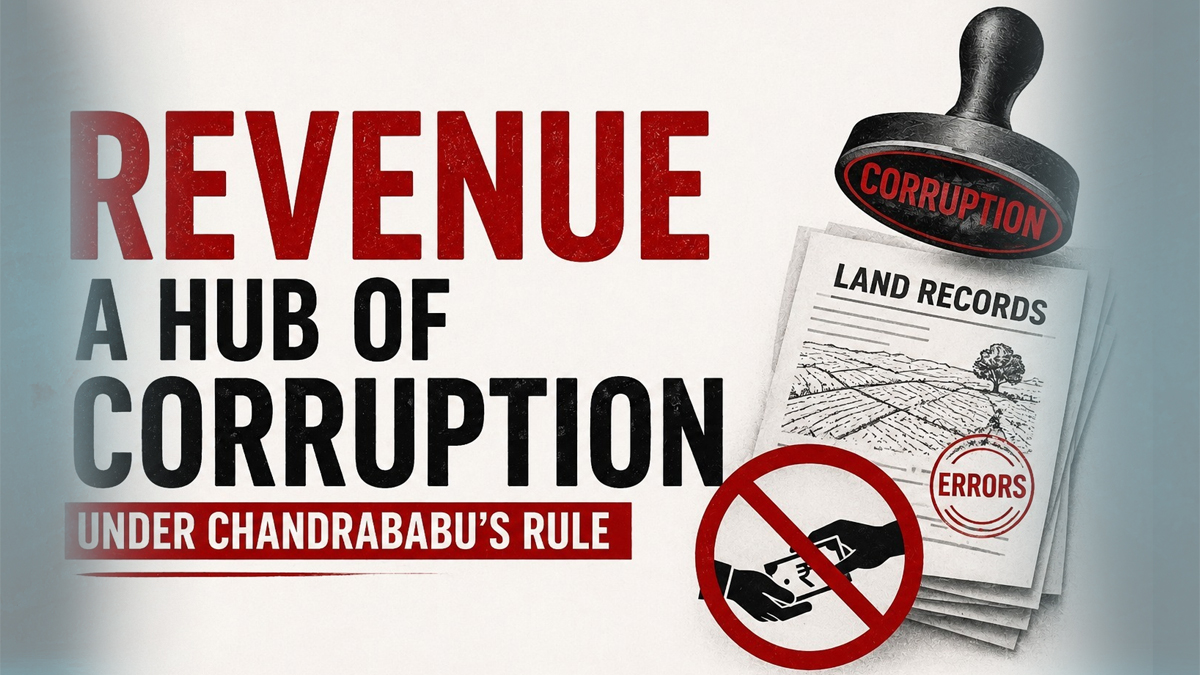
- Revenue Department turns into a breeding ground for corruption and administrative failure.
- Massive errors in issuance of Pattadar Passbooks to farmers.
- Nearly 70–80% of grievances received under PGRS relate to revenue issues.
- Farmers forced to make repeated visits for land registrations, loans and mutations.
- Endless delays in mutation of inherited lands.
- Gram Sabhas and Revenue Conferences reduced to mere token exercises.
- The coalition government, which once criticised YS Jagan’s land resurvey, is now continuing the same process while claiming credit for it.
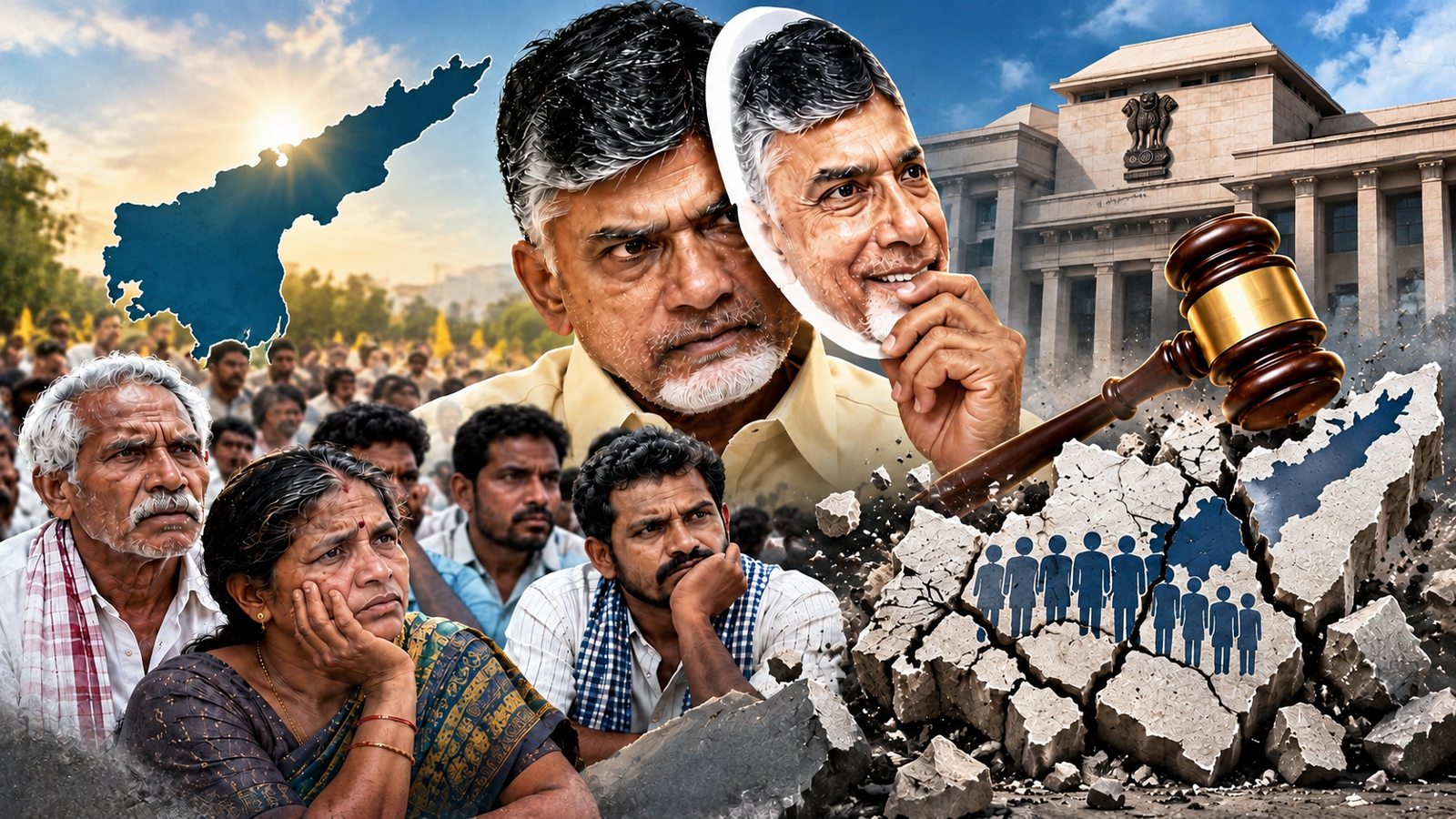
The Revenue Department under the Chandrababu Naidu-led coalition government has come under severe criticism for becoming synonymous with corruption, inefficiency and administrative negligence. Due to the government’s apathy and the indifference of officials, farmers and landowners are being forced to repeatedly visit revenue offices to resolve even routine land-related issues. At the same time, allegations are mounting that this dysfunctional system has become a source of illegal income for certain officials and middlemen. The fact that a majority of petitions received every Monday through the Public Grievance Redressal System (PGRS) relate to revenue matters reflects the gravity of the crisis.
Ironically, the coalition leaders who strongly criticised the land resurvey and land reforms undertaken by the Y.S. Jagan Mohan Reddy government during the elections are now continuing the very same system after assuming power. However, instead of improving the process, they have allegedly pushed the Revenue Department into further chaos. Even the newly issued Pattadar Passbooks bearing the State seal reportedly contain numerous errors, forcing farmers to spend months seeking corrections. Simple requests are witnessing inordinate delays, survey applications remain pending despite payment of challans, and even court directions are allegedly not being implemented, exposing the deep administrative failure within the department.
One of the biggest concerns is the overwhelming number of revenue-related grievances reaching the PGRS every week. Problems such as incorrect online land records, genuine patta lands being included in the prohibited list under Section 22-A, survey errors, failure to act against encroachments, and non-completion of surveys despite court orders have become widespread across the State. Farmers allege that although complaints continue to pile up, there is virtually no progress in resolving them.
Assigned Land Issue Returns
For years, farmers owning assigned lands included in the prohibited list under Section 22-A were unable to obtain bank loans or sell their lands. Recognising this issue, the YSRCP government removed assigned lands that had remained in beneficiaries’ possession for over 20 years from the prohibited list and granted full ownership rights to farmers. However, after the Chandrababu government assumed office in 2024, allegations emerged that even lands already converted into freehold were once again brought under the Section 22-A prohibited list. As a result, farmers are reportedly facing fresh obstacles in obtaining loans, selling land and carrying out other transactions.
Revenue Conferences Become Mere Formalities
In January 2025, the government conducted Gram Sabhas for ten days followed by Revenue Conferences for another fifteen days claiming that land issues would be resolved. However, farmers across several districts allege that the problems raised during these meetings were never actually addressed on the ground. While official records show that grievances were disposed of, affected farmers continue to approach the PGRS with the very same complaints. This has led to criticism that the entire exercise was merely cosmetic.
Land Rights Granted Even to the Dead
Serious irregularities have surfaced in Atkuru village of G. Konduru Mandal in NTR district, where nearly 1,524 acres of revenue land exist, including around 1,254 acres of patta land. Although a resurvey was conducted during the election Model Code of Conduct period, farmers allege that the corresponding LPM numbers have not been issued even after nearly three years.
Revenue records reportedly contain the names of people who died decades ago, individuals unrelated to the village, and numerous incorrect ownership entries. Lands belonging to one farmer have allegedly been recorded in another person’s name, while genuine landowners have been shown as landless. Despite more than 300 land transactions and over 100 inheritance mutations having taken place during the last two years, officials allegedly prepared new Pattadar Passbooks once again in the names of deceased persons. Farmers claim that over 580 out of nearly 600 land accounts in the village contain serious errors.
Mutation Process Comes to a Standstill
Farmers allege that mutation of surplus lands identified during the resurvey has virtually come to a halt because the government has tightened mutation procedures. As a result, even legal heirs are unable to secure mutation of inherited properties, leaving thousands of inheritance cases pending for nearly two years.
Although the previous YSRCP government granted ownership rights over “Dotted Lands” (Chukkala Bhumi), some cases requiring documentary verification remain pending. Farmers complain that despite submitting all necessary documents, officials are not responding. There are also allegations of prolonged delays in removing joint LPM entries, accompanied by demands for bribes and local-level settlements. These issues too account for a significant share of the complaints received through the PGRS.
From Criticising Land Reforms to Continuing the Same Resurvey
The Y.S. Jagan Mohan Reddy government initiated comprehensive land reforms with the objective of providing permanent solutions to land disputes and ensuring security of land ownership. It addressed long-pending issues relating to assigned lands, dotted lands, Lanka lands, Service Inam lands and conditional patta lands through a statewide land resurvey aimed at resolving lakhs of land disputes.
However, the coalition leaders who fiercely criticised both the Land Titling Act and the resurvey process during the election campaign are now continuing the very same resurvey and directing officials to complete all pending issues within a year. This reversal has become a subject of political debate.
Further allegations suggest that errors committed in Webland records during the earlier Chandrababu government resulted in even assigned lands existing before 1954 being wrongly included in the prohibited list. Farmers claim they have been forced to make repeated visits to Revenue offices and pay bribes merely to have such lands removed from the prohibited list, highlighting the continuing administrative failures and corruption within the Revenue Department.