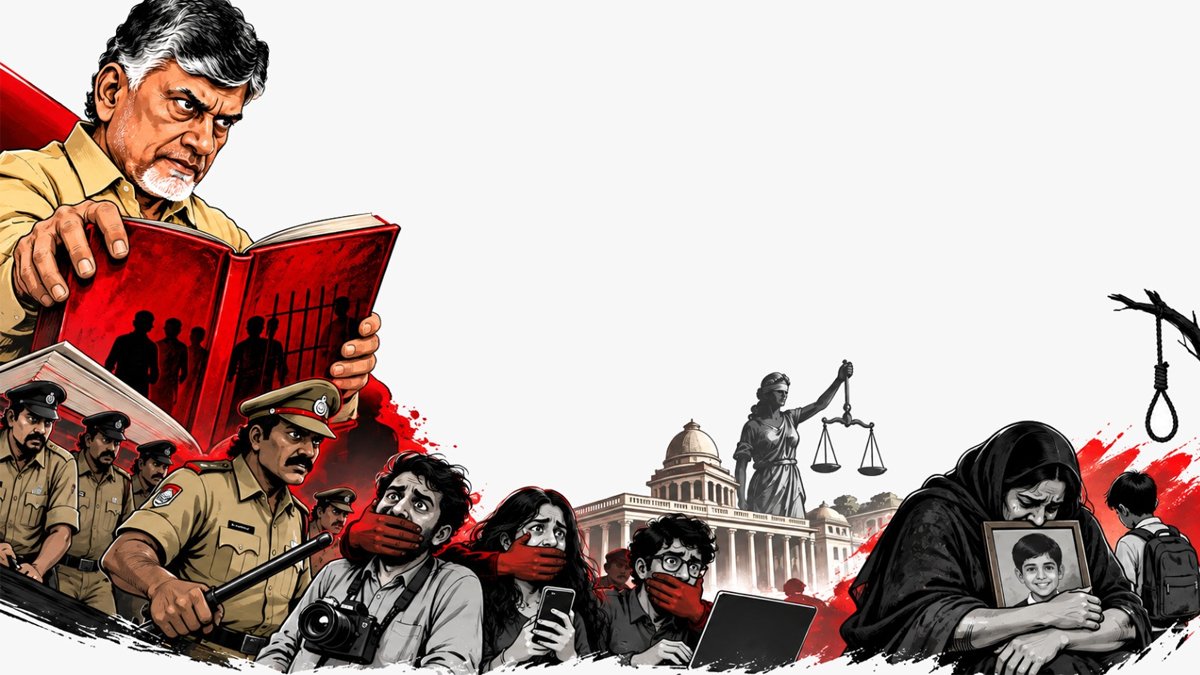
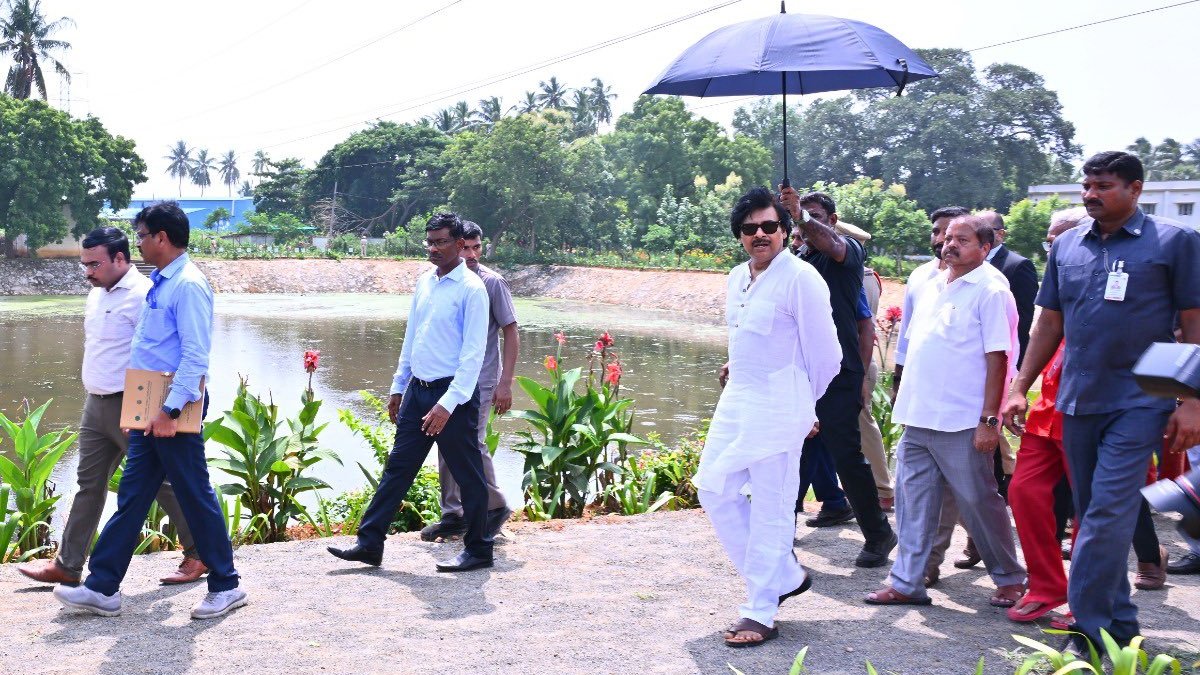
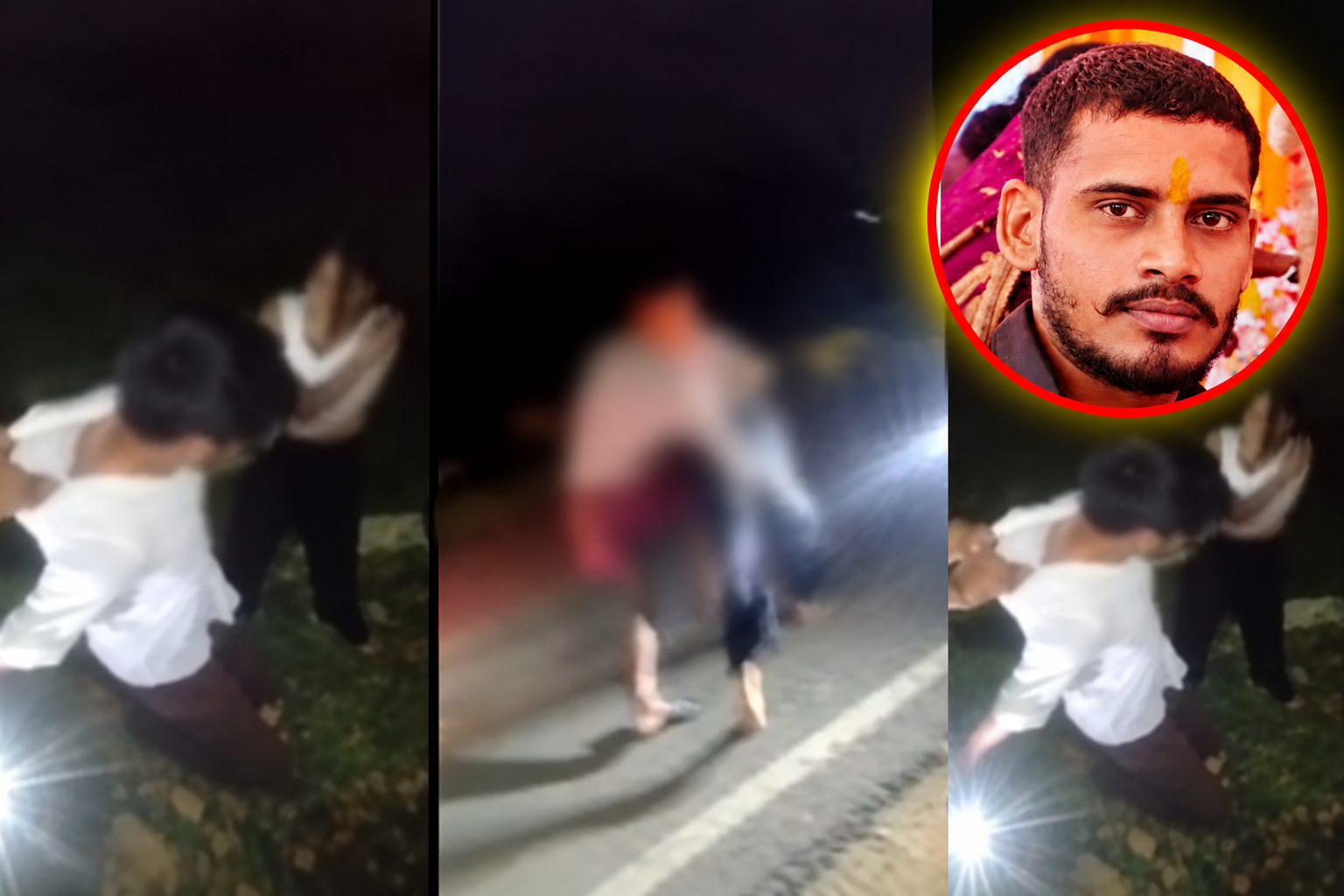
A disturbing pattern of policing has emerged in Andhra Pradesh, YSRCP said, claiming that ruling-party leaders and their supporters carry out attacks on opposition leaders, their homes and offices, damage property and vehicles, and create an atmosphere of intimidation, while criminal cases are ultimately registered against those who were attacked.
The party said YSRCP leaders who question such incidents, stage hunger strikes seeking justice or protest over public issues are being booked under serious provisions, including attempt to murder, the SC/ST Prevention of Atrocities Act and offences relating to disturbance of public order. “Those who attack get station bail, while the victims are sent to jail. Is this the rule of law the Chandrababu government speaks of?” the party questioned.
1. SAAP Protest: YSRCP Leaders booked after clashes
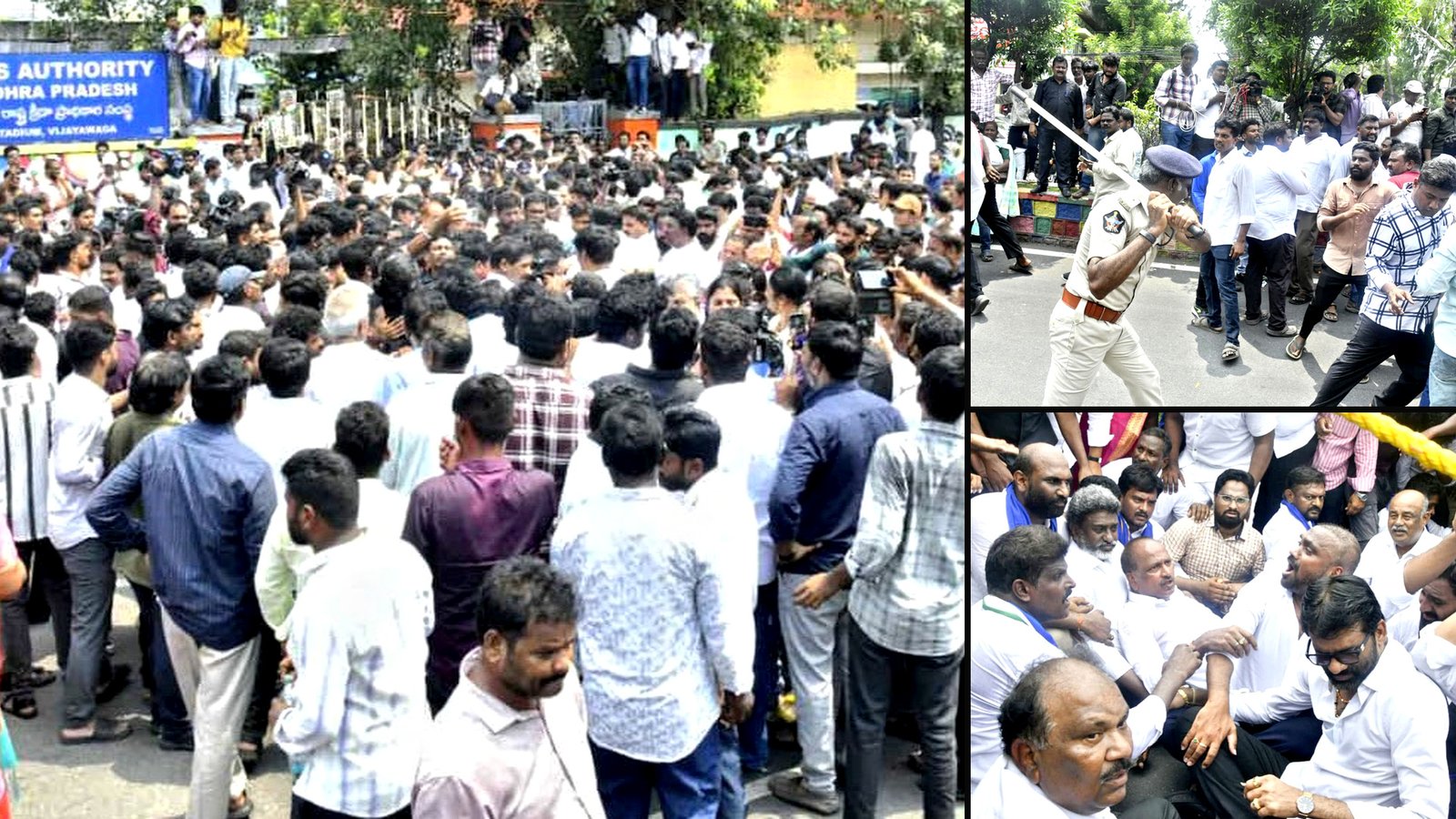
YSRCP had organised a protest outside the Sports Authority of Andhra Pradesh office in Vijayawada demanding a CBI inquiry into irregularities in Mega DSC-2025 sports quota recruitment. MLCs Mondithoka Arun Kumar and Ramesh Yadav, former ministers Jogi Ramesh and Meruga Nagarjuna, former MLAs Malladi Vishnu and Jakkampudi Raja, Perni Kittu and others participated.
YSRCP said TDP supporters attacked its leaders and workers during the protest and police also resorted to a lathi-charge, injuring several people. The party said serious cases, including attempt-to-murder and SC/ST Atrocities Act provisions, were subsequently registered against YSRCP leaders themselves, with Ambati Rambabu, Jakkampudi Raja, Perni Kittu and Nagarjuna Yadav among those named. It described the episode as the latest example of what it calls “reverse-case politics”.
2. Police action against those Questioning DSC Recruitment
YSRCP cadres led by former MLA Malladi Vishnu earlier conducted a relay hunger strike in Vijayawada Central seeking an investigation into DSC recruitment.
The party said supporters of MLA Bonda Uma attacked the peaceful protest camp, pulled down tents and threw eggs at activists and women. Instead of acting against those responsible for the disturbance, police dispersed the protesters and registered cases against YSRCP leaders and workers on the ground that the programme did not have permission.
YSRCP questioned whether peacefully protesting on a public issue had itself become an offence.
3. Attack on Ambati Rambabu’s Residence, followed by cases against him
YSRCP said TDP cadres attacked the Guntur residence and office of former minister Ambati Rambabu, pelted stones, damaged vehicles and furniture and entered the office premises.
According to the party, Rambabu’s wife and daughter were forced to take shelter inside a room during the attack. YSRCP said the principal attackers were not arrested, while Rambabu himself was subsequently arrested and jailed in connection with cases based on remarks attributed to him.
When Rambabu later staged a hunger strike outside the Collectorate demanding the arrest of those who attacked his home, another case was registered against him for conducting the protest without permission.
4. Petrol-bomb attack on Jogi Ramesh’s house, Case against the Victim
YSRCP said TDP supporters attacked former minister Jogi Ramesh’s residence at Ibrahimpatnam, threw stones and attempted to set the house on fire using petrol bombs.
Jogi Ramesh was not at home at the time, but his wife and elderly father were present. The party said some people involved in the attack were arrested under provisions that enabled them to quickly secure bail, while those responsible for planning the attack were protected.
A subsequent case was registered against Jogi Ramesh for disturbing public peace, prompting YSRCP to question why the person whose house was attacked was himself being prosecuted.
5. Undavalli clash followed by atrocities cases against YSRCP leaders
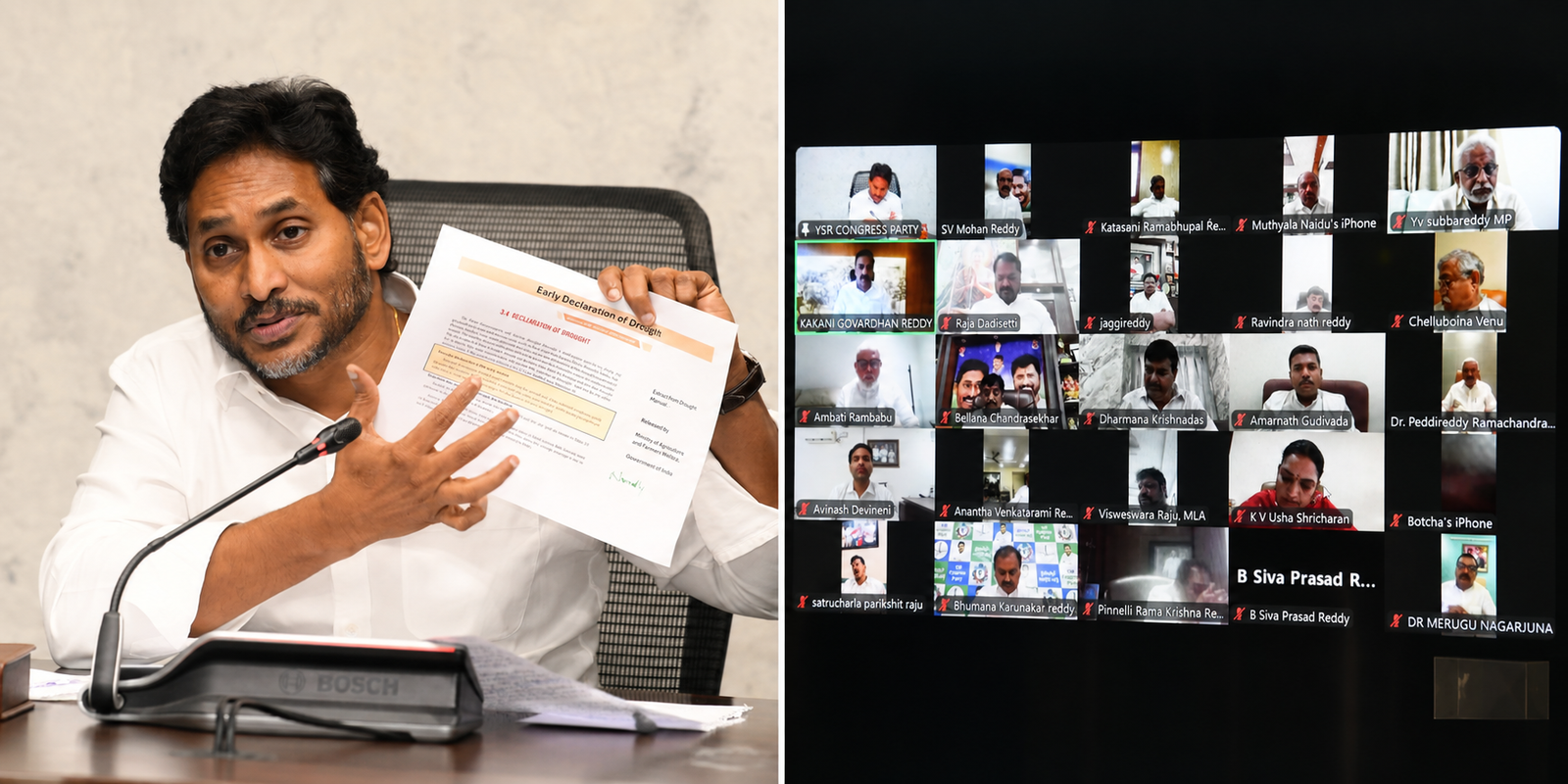
Farmers from the Amaravati region approached Y.S. Jagan Mohan Reddy complaining that their lands were being damaged by excavation. A YSRCP delegation later visited the Undavalli-Penumaka area in support of the farmers.
YSRCP leaders including Ambati Rambabu and Perni Nani said TDP supporters blocked and attacked them at Undavalli Centre. They claimed people were brought from outside the area and sent against the delegation after being given alcohol.
Despite injuries to YSRCP leaders and workers, cases under the SC/ST Atrocities Act were subsequently registered against Ambati Rambabu, Perni Nani and others, the party said.
6. Attacks on Sakshi Offices Over Analyst’s Remarks
TDP cadres attacked Sakshi offices in Vijayawada and other locations following comments made by analyst V.V.R. Krishnam Raju during a Sakshi TV discussion, YSRCP said.
Sakshi management clarified that the comments were the analyst’s personal views and were not endorsed by the organisation. It also stated that it respected women and that objectionable remarks by an individual should not be attributed to the media organisation.
Despite the clarification, groups gathered outside Sakshi offices, intimidated staff and attacked the premises. YSRCP described the incidents as an attempt to suppress media voices through physical intimidation.
7. Farmers Seeking MSP Booked After Violence
At Mamillapalli in Ponnur mandal of Guntur district, farmers demanded that maize be purchased at the Minimum Support Price announced by the government and questioned procurement at lower prices.
The affected farmers later told Y.S. Jagan Mohan Reddy that supporters of MLA Dhulipalla Narendra entered the village in large numbers and attacked farmers and a warehouse. Women farmers were also beaten and dragged, they said.
YSRCP said police did not act against the attackers but registered serious cases, including attempt-to-murder and SC/ST Atrocities Act provisions, against the affected women farmers themselves. The party said it had approached the National Commission for Scheduled Castes and human-rights bodies over the incident.
8. Attack on ZPTC Member, Followed by ‘Reverse Cases’
YSRCP said its ZPTC member Pratap Reddy suffered serious injuries in an attack by TDP leaders.
The party claimed police delayed action against the principal suspects while responding quickly to a counter-complaint lodged by the rival group. Cases were then registered against YSRCP leaders and workers who had been attacked, it said.
YSRCP described this as another instance in which different standards were being applied to ruling-party supporters and opposition activists.
9. Midnight Attack on MLA Virupakshi’s House, Attempt-to-Murder Case Against Him
YSRCP said its MLA Virupakshi’s house at Chippagiri in Kurnool district was attacked at midnight while his wife and children were inside.
The party said those who entered the premises and frightened the family were not subjected to stringent action, while an attempt-to-murder case was subsequently registered against Virupakshi himself.
YSRCP said the sequence had effectively turned those who went to the house into victims and the resident whose house was attacked into the accused.
10. Cases Against Around 30 People After Punganur Protest
As part of the “Two Years of Chandrababu’s Betrayal” programme, YSRCP cadres organised a peaceful protest in Punganur.
Although no violent incident took place, the party said police named former Chittoor MP Reddappa as A-1 and registered cases against around 30 leaders and workers, including former municipal chairman Aleem Basha.
YSRCP said registering mass cases against those exercising their constitutional right to protest amounted to suppression of democratic dissent.
11. Cases Against BC Leaders After Jagan’s Srikakulam Visit
YSRCP said the government targeted its BC leaders after Y.S. Jagan’s visit to Srikakulam received a large public response.
Based on a complaint from an individual, cases were registered against former minister Dharmana Krishna Das, Perada Tilak, Gedela Purushotham, Routhu Shankara Rao, Ambati Srinivas, Chintada Ravi and others.
The party said even leaders with no direct connection to the incident were named in the FIR, creating an atmosphere in which participation in YSRCP programmes could result in criminal cases.
12. “Is This Equal Application of Law?”
YSRCP said a common pattern runs through these incidents: ruling-party leaders or supporters first carry out an attack; when victims complain, registration of the case is delayed; after pressure mounts, comparatively weaker provisions are invoked, facilitating bail.
At the same time, when a ruling-party supporter files a complaint, the party said serious provisions such as attempt to murder, atrocities offences and public-order charges are invoked against opposition leaders, including individuals with no direct role in the incident.
YSRCP said the original attack then disappears from public focus while the criminal cases against the victims become the dominant official narrative.
13. “Has Peaceful Protest Become a Crime?”
YSRCP said governments and political power are temporary, but every criminal case registered by police and every administrative decision remains permanently on the official record.The party warned that attacks, arrests and criminal cases may temporarily suppress opposition voices but cannot permanently suppress facts. Protecting those responsible for violence while prosecuting those who suffered the attack cannot be described as democratic governance, it said, characterising such conduct as political victimisation through misuse of State power.