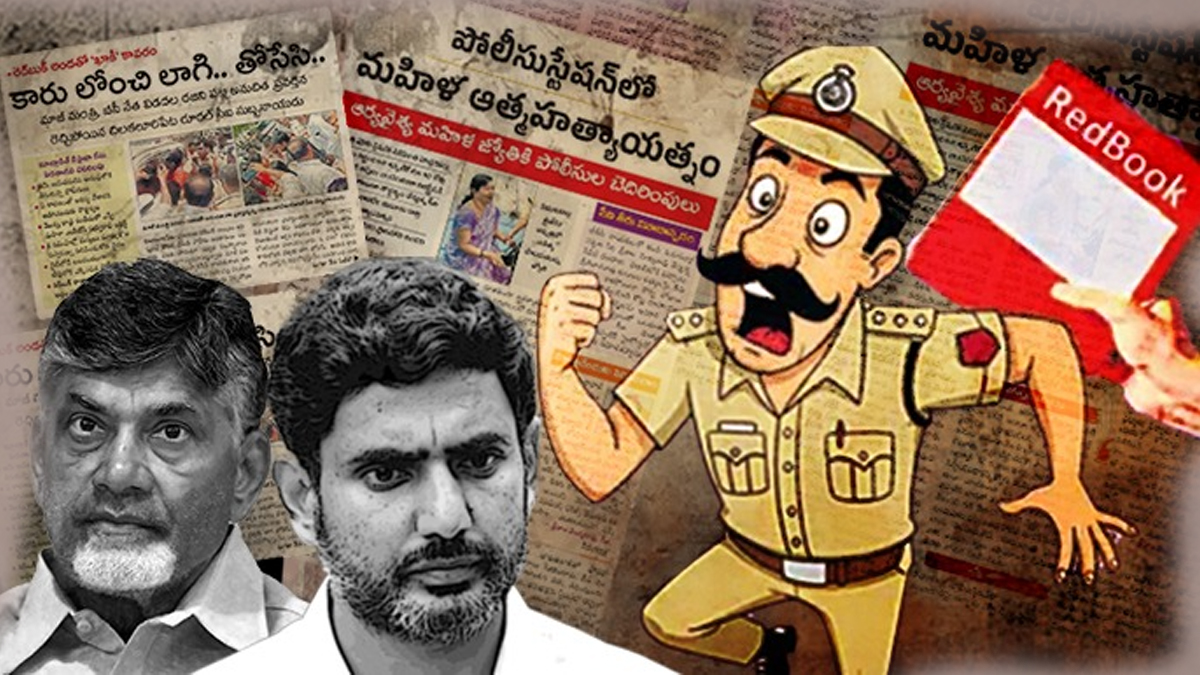
Law and order in the state has severely deteriorated under “Red Book governance,” with political control overriding institutional neutrality. Peace and public safety have been pushed aside, and the police system is increasingly seen as compromised, with instances of officers themselves getting entangled in crimes, misuse of authority, and targeted actions against opposition voices. Civil liberties are being curtailed, and an atmosphere of fear is taking hold across regions, particularly in Palnadu, where a series of incidents has raised serious concerns about governance and policing standards.
The policing system, which is expected to function impartially in a democratic framework, is now widely perceived as acting in a partisan manner, showing leniency toward ruling party affiliates while taking harsh and often questionable action against opposition leaders and ordinary citizens. Reports of illegal cases, custodial harassment, physical assaults, and intimidation over even social media posts point to systemic overreach and erosion of constitutional safeguards.
Several alarming incidents underline this breakdown. In multiple cases, police harassment allegedly drove individuals to suicide attempts, while opposition leaders were subjected to arrests, abductions, and fabricated cases. There are instances where police officers were accused of aiding honor killings, accepting bribes, or attempting to manipulate postmortem findings. In another case, an assistant sub-inspector allegedly blackmailed couples by recording private videos and extorting money, even coercing women for sexual favors. A constable was arrested in connection with a murder case, raising further questions about internal accountability within the force.
Women and vulnerable sections appear to be particularly affected. Cases of custodial intimidation, harassment of women during night hours in violation of legal norms, and assaults on Dalit individuals have surfaced. In one shocking incident, police allegedly attempted to abduct a Dalit leader by scaling compound walls in plain clothes. In another, a woman attempted suicide inside a police station due to sustained harassment. Such incidents highlight not only misconduct but a collapse of procedural safeguards.
The Palnadu and Bapatla regions have emerged as flashpoints, with repeated controversies involving CIs, SIs, and constables. From wrongful implication in murder cases to suppression of evidence and political interference in investigations, the pattern suggests a deep institutional crisis. Even cases where courts have convicted police personnel for serious crimes have not prevented recurrence of misconduct, indicating weak deterrence and lack of systemic reform.
Public anger is rising as trust in law enforcement declines. When those tasked with upholding the law are seen violating it, citizens are left with little recourse. The perception that police act swiftly only in politically motivated cases, while ignoring serious crimes involving ruling party figures, is further deepening distrust. Allegations of inaction in cases involving sexual misconduct by political leaders, contrasted with aggressive action against opposition sympathizers, reinforce concerns of selective policing.
The situation demands urgent accountability. There is a growing call for independent inquiries into police misconduct, strict enforcement of legal protocols, and restoration of institutional neutrality. Without corrective measures, the continued erosion of law and order risks undermining democratic values and public confidence in governance.