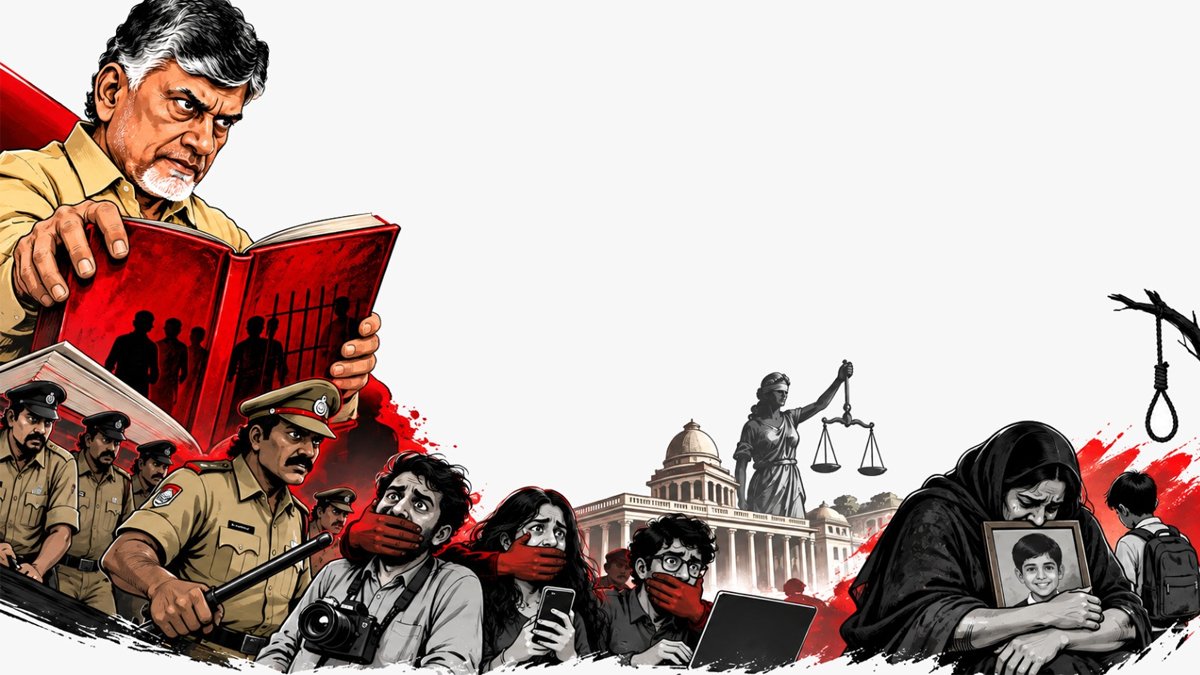
The Chandrababu Naidu-led coalition government is using police power for political vendetta, crushing democratic dissent and targeting social-media activists and journalists with fabricated cases. Even repeated judicial criticism has failed to alter the government’s authoritarian approach.
The latest developments in three separate cases expose this pattern. In the case of social-media activist Ramala Manvith Krishna Reddy, police ultimately informed the court that the case was being closed as a “Mistake of Fact.” In another case, journalist Y.N.R., who spoke about the humiliation reportedly faced by noted spiritual speaker Chaganti Koteswara Rao during a Tirumala visit, was prosecuted and charge-sheeted. The High Court questioned the manner in which the case was pursued and suggested mediation, observing that continuation of the prosecution could leave the government in an embarrassing position.
Meanwhile, in Ongole, Maulabi, the mother of Class VI student Sheikh Toushiq, fought for justice following her son’s suspicious death. Instead of receiving justice, she was reportedly threatened with counter-cases by police. She later attempted suicide and died while undergoing treatment.
These three cases, taken together, raise serious questions about the government’s priorities: swift police action against those who criticise the government, but little comparable urgency when ordinary citizens seek justice.
Suppressing voices that question the government
The coalition government has completed 27 months in office, but has failed across several sectors, the note states. It has not properly implemented its manifesto promises and has discontinued several schemes that existed earlier. At the same time, government leaders are facing criticism over commissions, land encroachments, illegal sand transport and liquor-related activities.
Questions have also been raised over irregularities in DSC recruitment, crimes against women, sexual harassment, failure to address drought conditions and several other governance issues. Newspapers, journalists, social-media activists, youth and students have increasingly begun questioning the government.
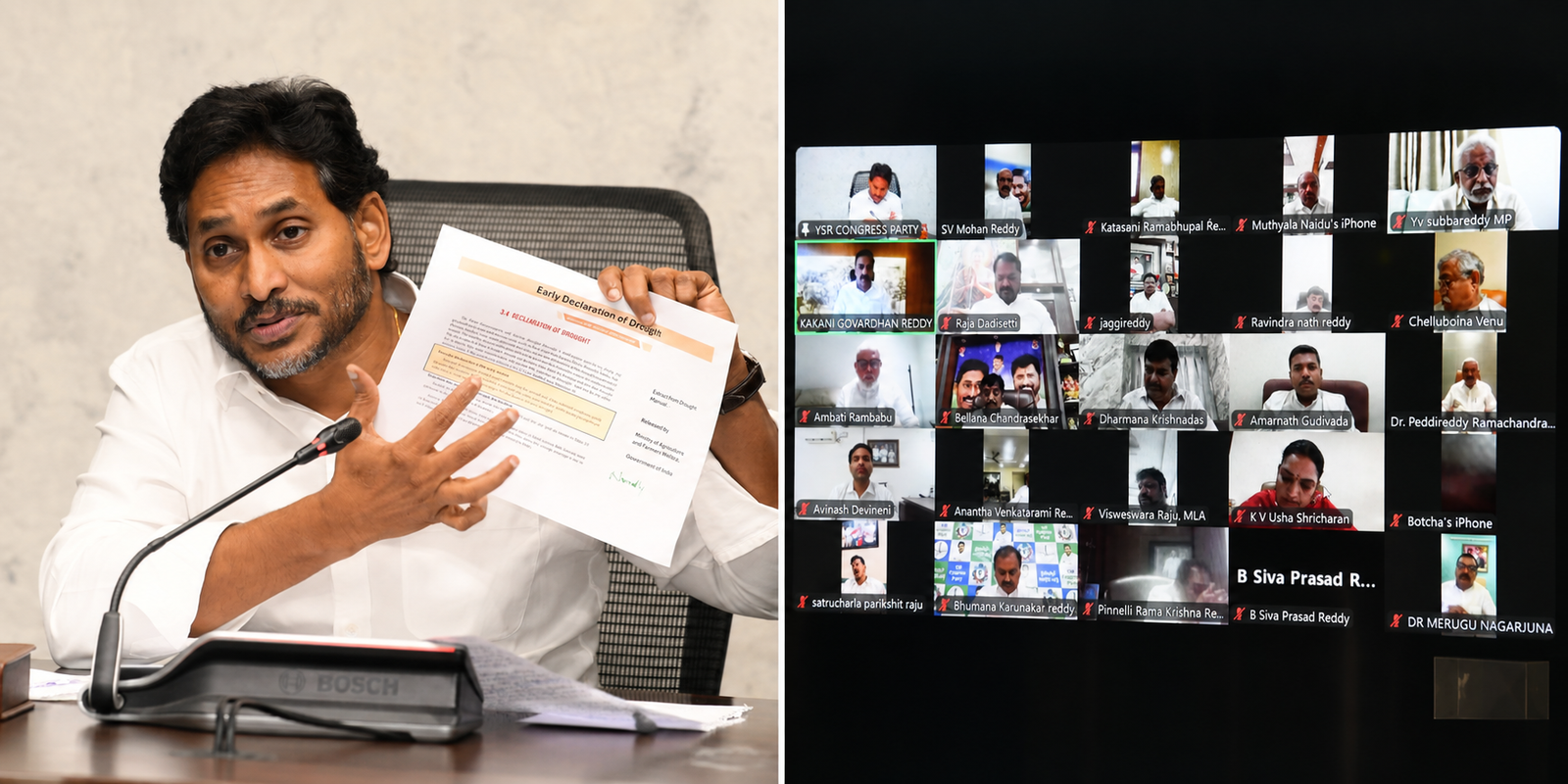
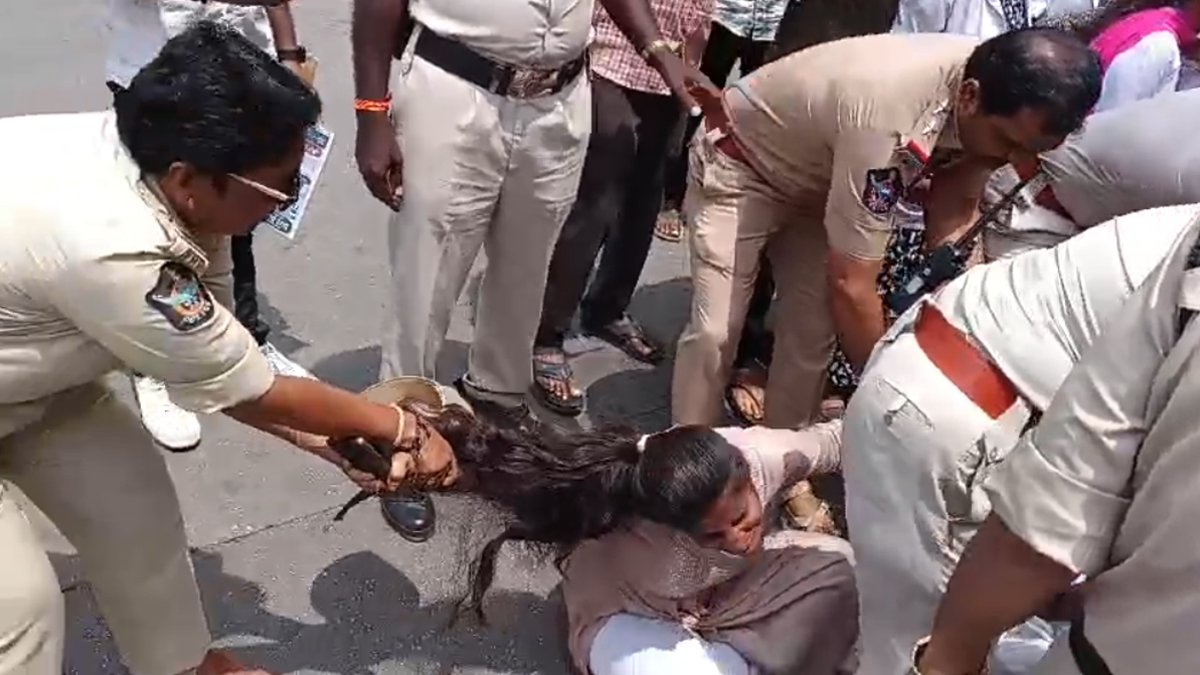
Instead of responding to those questions, the government is using police power through cases, arrests and political retaliation, the note says. The recent lathi-charge on youth who took to the streets demanding job notifications is cited as another example. The government is also accused of monitoring their WhatsApp groups, social-media networks and digital activity.
The Manvith case — weaknesses exposed in official records
Social-media activist Ramala Manvith Krishna Reddy had been posting satirical criticism of the government. A case was registered against him at G. Konduru Police Station under the NTR District Police Commissionerate on November 10, 2024, as Crime No. 245/2024, based on a complaint by Bejawada Ganapathi of G. Konduru.
The police invoked IPC Sections 419 (cheating by impersonation), 465 (forgery), 505(2) (statements promoting enmity between groups), and Section 66-D of the Information Technology Act (cheating by personation using a communication device).
The complaint stated that Manvith appeared on the Navagalam YouTube channel posing as a TDP worker and used TDP symbols and Chief Minister Chandrababu Naidu’s photograph. It further said that he attributed promises to the TDP that the party had never made and spoke in a manner intended to create differences between TDP and Jana Sena workers.
However, apart from naming Manvith Krishna Reddy as the accused, the FIR reportedly did not contain even basic personal particulars.
The High Court questioned how serious penal sections could have been invoked without first collecting basic details about the accused. It asked whether any preliminary inquiry had been conducted before registering the case or whether the FIR had been hurriedly prepared under political pressure.
Contradictions in the dates
The FIR recorded the date of the alleged incident as December 19, 2023, at 2 p.m. However, the complainant stated that he saw the video on November 10, 2024.
Although the complaint said the video had been uploaded ten months earlier, the dates recorded in the FIR indicated a gap of nearly eleven months. The column requiring an explanation for the delay in lodging the complaint merely stated that the complaint had been given “today,” without any detailed justification.
This raised a further question: why were these inconsistencies not examined before registering the case?
Case closed as ‘Mistake of Fact’
The case against Manvith was registered on November 10, 2024. On December 22, 2025, Mylavaram Division Assistant Commissioner of Police Y. Prasad Rao issued orders permitting Crime No. 245/2024 to be referred as a “Mistake of Fact.”
The order followed an investigation by the G. Konduru Sub-Inspector and recommendations from the Mylavaram Circle Inspector. The SI was directed to submit the final report before the appropriate court and report the outcome.
In effect, 407 days after the case was registered, the police investigation itself concluded that there was insufficient factual basis to sustain the allegations against Manvith.
Who is responsible for 13 months of harassment?
The Manvith case raises several questions that the government must answer.
Why were four serious penal provisions invoked without evidence establishing an offence? If impersonation was alleged, whom exactly did he deceive? If forgery was alleged, what forged document or electronic record had he created? Why was political criticism between parties treated as an attempt to create enmity between groups?
How was an FIR registered without even recording the accused person’s age and address? After police themselves concluded that the case was factually unsustainable, what action was taken against the officers responsible? Who will compensate Manvith for the mental, social and legal hardship he faced for 407 days? And why was no action taken against the complainant if the information underlying the case ultimately failed to stand scrutiny?
A criminal case for speaking about the Chaganti episode?
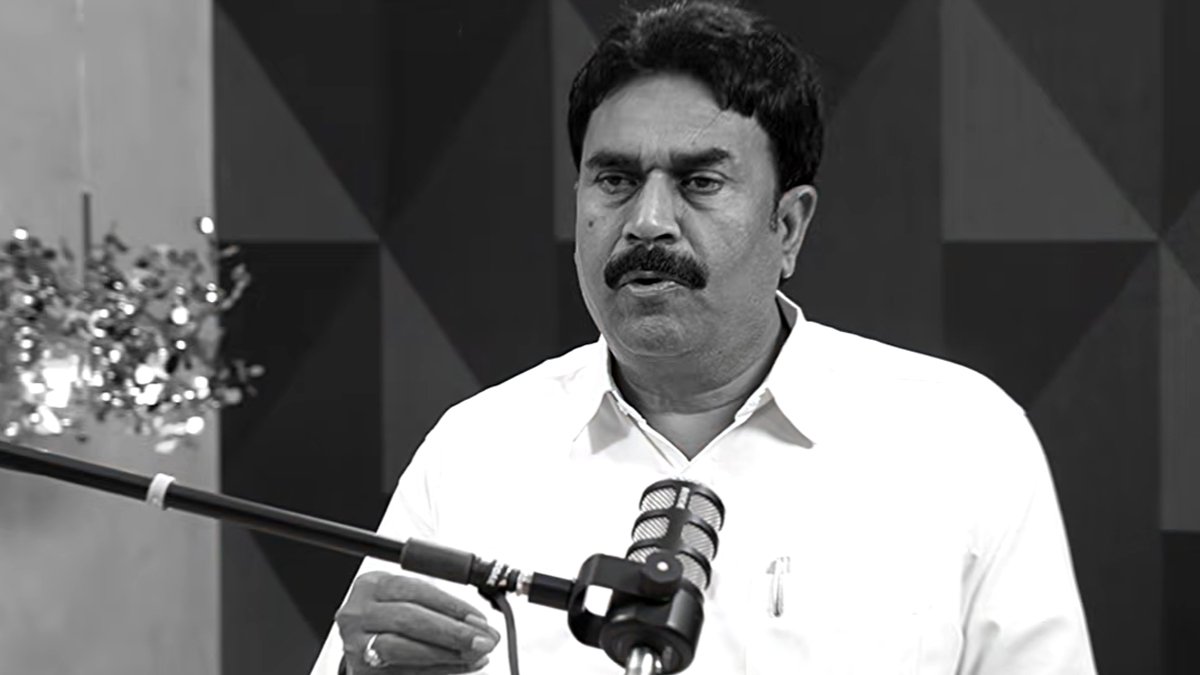
Tirupati police registered a case under several provisions against journalist Y. Narasimha Rao, known as YNR, over a video he made concerning spiritual speaker Chaganti Koteswara Rao.
TTD officials complained that YNR’s video, which stated that Chaganti had been humiliated, could disturb law and order. Police subsequently registered criminal proceedings.
YNR challenged the case before the High Court. His counsel argued that he had merely performed his duty as a journalist by commenting on an issue of public concern and that a false criminal case had been registered against him.
After hearing the arguments, Justice Kuncham Maheswara Rao stayed the charge sheet. The High Court also questioned the manner in which the charge sheet had been filed.
The Court suggested that the parties explore an out-of-court settlement and indicated that continuation of the proceedings could create an embarrassing situation for the government if the charge sheet were ultimately quashed. It directed the TTD administration to enter mediation with YNR and appointed retired District and Sessions Judge A. Radhakrishna as mediator. The case was stayed until further orders.
The larger question is straightforward: when a journalist comments on a public issue, the government should respond with facts. Using criminal cases to intimidate journalistic expression is not consistent with democratic governance.
A mother who fought for justice after her son’s suspicious death
On February 14, 2026, Class VI student Sheikh Toushiq was found dead under suspicious circumstances in the bathroom of the hostel at Sri Chaitanya Navodaya School in Moolaguntapadu, Singarayakonda mandal of Prakasam district.
His mother, Maulabi, spent months demanding that those responsible for her son’s death be identified, action be taken against the school management and the hostel, which she said lacked proper permissions, be closed.
She even staged a protest outside the school but, according to the note, received no clear assurance from the government.
On September 10, while continuing her protest, Maulabi consumed pesticide. She was first taken to Ongole RIMS and later shifted to Hyderabad for advanced treatment. She died while undergoing treatment.
What did the government do until a mother lost her life?
Why was there no transparent investigation into Toushiq’s death? Why was immediate action not taken against an allegedly unauthorised hostel? Why was Maulabi, who spent months seeking justice, not given confidence or institutional support?
What were the Education Department, police and district administration doing until she reached such an extreme state of distress?
Police are able to register cases over social-media posts within hours. Why, then, could they not deliver justice to a mother who spent months fighting over the suspicious death of her child?
Three cases, one pattern
The case against Manvith that ultimately failed for lack of factual basis, the charge sheet against journalist YNR, and the death of Maulabi after her prolonged struggle for justice following her son’s death together raise fundamental questions about the priorities of the government.
Police appear to move rapidly when complaints are made against those who criticise the government. But the same urgency is not visible when ordinary citizens seek justice.
Why do the police respond immediately to complaints from ruling-party functionaries while appearing indifferent to the tears of ordinary people?
Suppressing questioning voices is not governance. Harassing citizens through cases that cannot withstand scrutiny is not rule of law. And using the police machinery for political retaliation while leaving victims to struggle for justice cannot be called democracy.