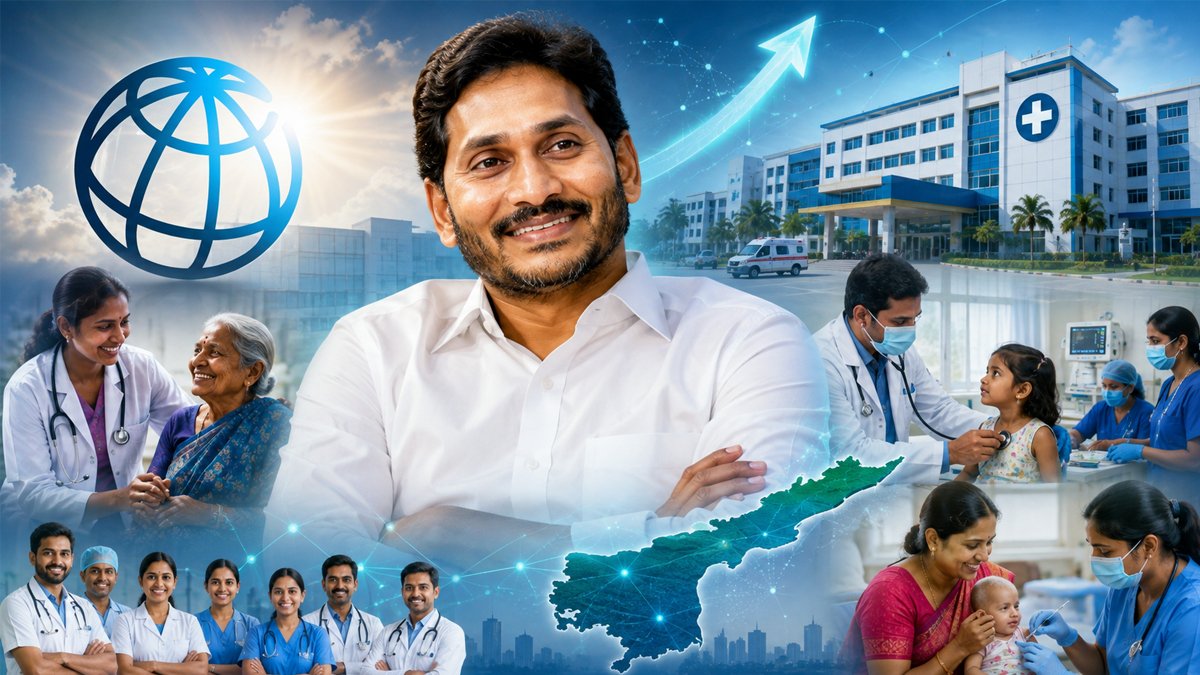
When it comes to providing healthcare services to the people, former Chief Minister Y.S. Jagan Mohan Reddy followed the path of strengthening the public healthcare system, whereas Chief Minister N. Chandrababu Naidu has chosen the path of privatisation.
Under the Chandrababu government, institutions such as medical colleges and Urban PHCs are being handed over to private players and outsourcing agencies.
The World Bank report has praised former Chief Minister Y.S. Jagan Mohan Reddy for giving the highest priority to protecting public health and for comprehensively reforming the government healthcare system right from the primary level.
The report observed that the innovative introduction of the Family Doctor system, along with Village Clinics and Urban Clinics, greatly benefited people living in rural and tribal areas. It also noted that large-scale healthcare services were delivered to the public through telemedicine during the previous government.
The report further stated that the government implemented a “Zero Vacancy” policy in the health system and recruited nearly 50,000 healthcare personnel within just two years.
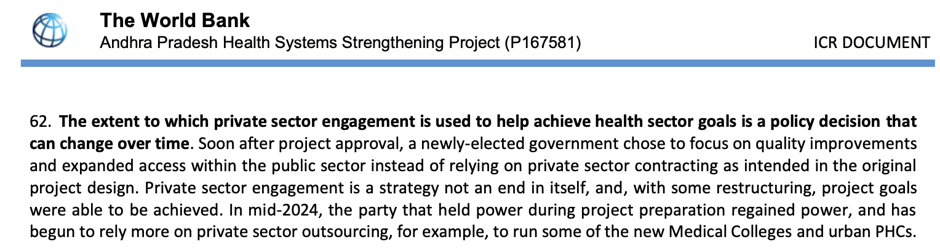
The World Bank report also drew a clear distinction between the approaches of the two governments. While former Chief Minister Y.S. Jagan followed the path of strengthening the public healthcare system, Chief Minister N. Chandrababu Naidu has taken the private-sector route in providing healthcare services to the people.
It stated that the Chandrababu government has begun depending on the private sector and outsourcing for running institutions such as medical colleges and Urban Primary Health Centres.
With financial assistance from the World Bank, the Y.S. Jagan government had implemented the Andhra Pradesh Health Systems Strengthening Project. The World Bank recently released its report on the implementation and outcomes of the project.
The report contains several significant observations on Y.S. Jagan’s policies in the health sector and the approach being followed by the Chandrababu government.
The details are as follows…

64. Innovations in recruitment and policies to boost staff retention are possible if decision-makers have the courage and tenacity to reject long-accepted limitations. For example, AP strove for a “zero vacancy policy” to realize its vision of improved access and quality. The state rationalized staffing patterns; undertook a huge hiring drive, with a streamlined advertising and hiring process; moved bureaucratic hurdles aside; offered retention incentives (such as preference for post-graduate places and promotions), additional pay for working in remote areas, and higher-than usual pay offer authorizations to attract providers with scarce skills. Couples were hired to fill posts in underserved areas.
⇒ Soon after the project received World Bank approval, the Y.S. Jagan government decided that, instead of depending on private-sector contracts, the focus should be on improving the quality of healthcare services in the public sector and expanding access to health services. The Y.S. Jagan government worked with commitment and dedication to achieve the project objectives. The Chief Minister conducted regular reviews, while the top political leadership accorded clear priority to the project. Continuous monitoring and periodic reviews contributed significantly to achieving the desired results. Through this approach, the government succeeded in its objective of creating better infrastructure within the public healthcare system itself.
⇒ Former Chief Minister Y.S. Jagan took transformative decisions by moving away from long-standing conventional approaches in the health sector. For instance, to realise the goals of better access and improved quality of healthcare, Andhra Pradesh implemented a “Zero Vacancy Policy.” Staffing patterns were rationalised, administrative hurdles were removed and a massive recruitment drive was undertaken. Healthcare personnel were provided incentives and opportunities for promotion, while those working in remote areas were given additional pay. To attract medical professionals with scarce and specialised skills, the government also offered higher-than-usual remuneration, demonstrating its commitment to strengthening public healthcare.
- A large-scale telemedicine platform was launched, ensuring remote access to specialist consultations, particularly benefiting rural and tribal populations. Andhra Pradesh contributed nearly one-third of India’s national teleconsultations during the project period. More than 75,000 teleconsultations and related prescriptions are written each day.
- The NCD 2.0 survey in 2022-23 screened about 80 percent of the state population, and generated a unique health identity (ABHA ID) for all surveyed household members
⇒ As part of the “Zero Vacancy” policy, a Medical Recruitment Board was established to accelerate recruitment. Salaries, allowances and incentives were revised, and mandatory rural service was introduced for all postgraduate medical students. Steps were taken to ensure adequate staffing across all PHCs and VHCs (Village Health Clinics). Each PHC was provided with two Medical Officers and 12 paramedical staff, while every VHC was staffed with a Community Health Officer, an ANM and ASHA workers to deliver healthcare services. In just two years, nearly 50,000 healthcare personnel were recruited.
⇒ A telemedicine platform was launched to enable people to consult medical specialists remotely. This particularly benefited people living in rural and tribal areas. More than 75,000 teleconsultations and prescriptions were provided every day. Nearly one-third of all teleconsultations recorded nationally were from Andhra Pradesh alone.
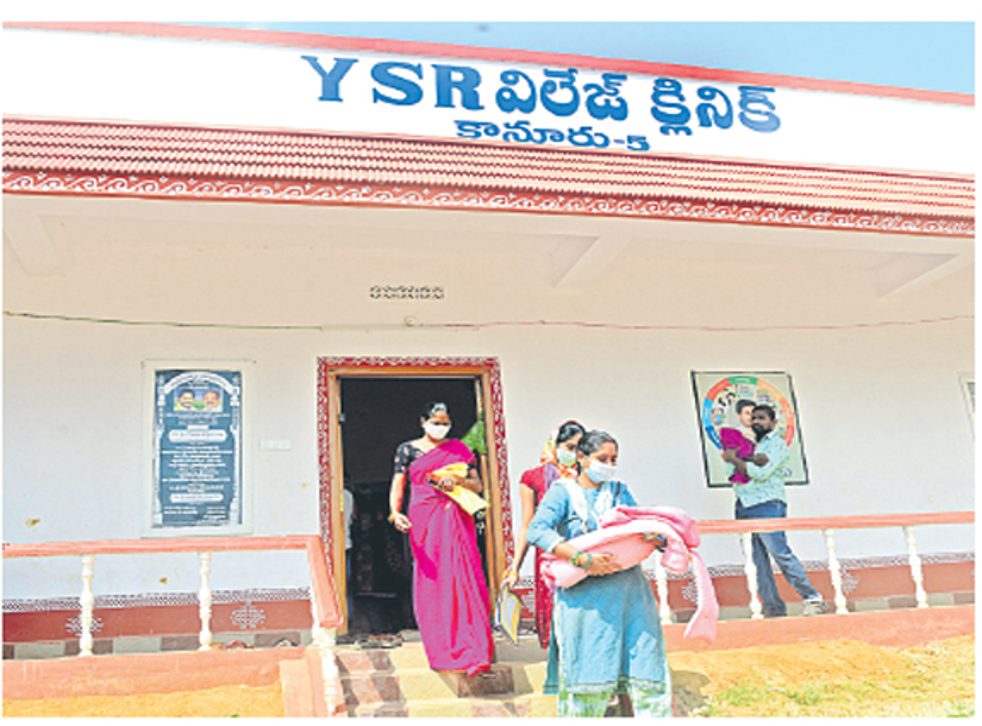
⇒ The YSRCP government undertook a comprehensive strengthening and restructuring of healthcare infrastructure from the primary level onwards. Each PHC was mapped to 12–13 VHCs, with every VHC serving a population of around 2,500–4,500 people, with adjustments made in tribal areas according to local requirements. A total of 4,345 new VHCs and 88 new PHCs were established. In addition, 977 rural PHCs and 184 urban PHCs were renovated. The number of Health and Wellness Centres was doubled to 10,086.
These facilities were provided with the necessary equipment and personnel to deliver an expanded package of healthcare services, including screening for hypertension, diabetes and common cancers, maternal and child healthcare, family planning, oral healthcare, mental healthcare and emergency obstetric care.
⇒ Through the NCD–2 Survey conducted in 2022–23, nearly 80 percent of the State’s population was screened, and a unique health identification number/ID was generated for those covered under the survey.
⇒ Mobile Medical Units (MMUs) equipped with 105 medicines from the Essential Drugs List and facilities to conduct 14 basic diagnostic tests were allocated to all Primary Health Centres. A reserve MMU was also made available in every district. Four additional doctors were deployed in each district to step in whenever required. Each MMU was staffed with a doctor, along with a driver and a data-entry operator.
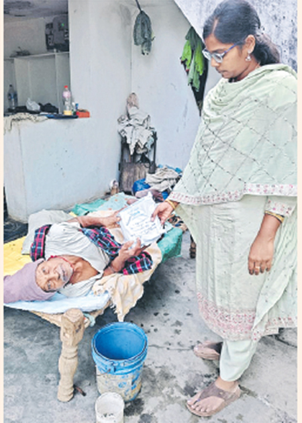
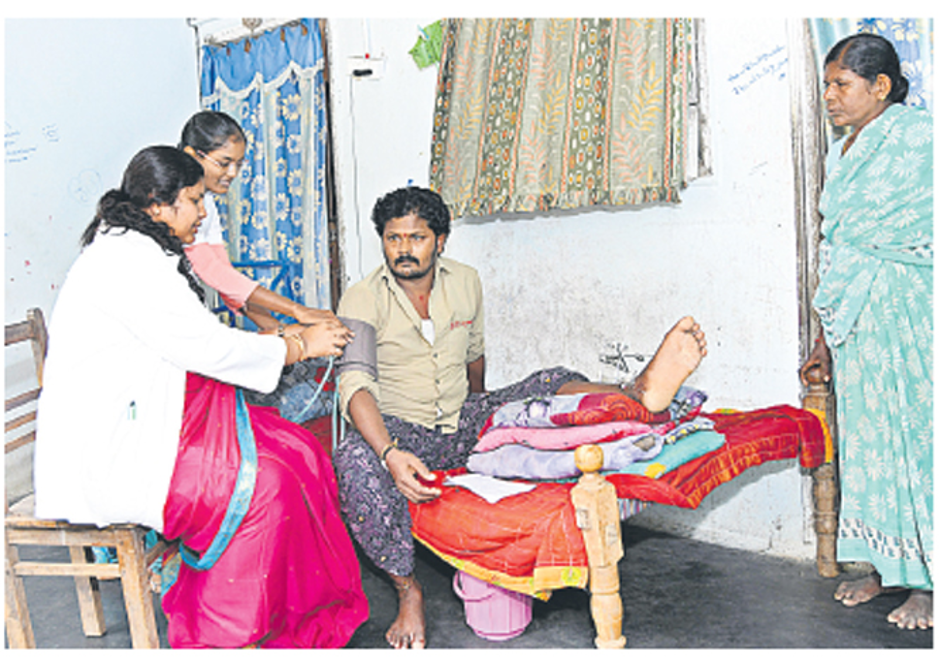
⇒ The Family Doctor Programme was officially launched in April 2023, following a pilot phase that began in October 2022. Under the programme, a doctor, along with a Mobile Medical Unit, visited Village Health Clinics twice every month. Through a fixed and regular schedule, medical services were taken closer to people, virtually bringing the doctor to their doorstep.
⇒ Telecommunication connectivity and digital devices were established across all health facilities. Healthcare personnel were trained in the use of new digital systems and medical technologies. A central digital quality dashboard was used to continuously analyse performance indicators and take appropriate corrective measures based on the findings.
Lives Protected During COVID-19
⇒ During the COVID-19 pandemic, critical medical supplies were made available, including 10,000 oxygen concentrators, ventilators, Personal Protective Equipment (PPE) and infection-prevention materials. Dedicated COVID wards, oxygen-supported beds and critical-care units were established in district and teaching hospitals. More than 100 laboratories were equipped with COVID-testing capacity, while mobile testing units were deployed to remote areas. Special attention was given to rural and marginalised communities, ensuring timely treatment and vaccination and thereby helping save lives.