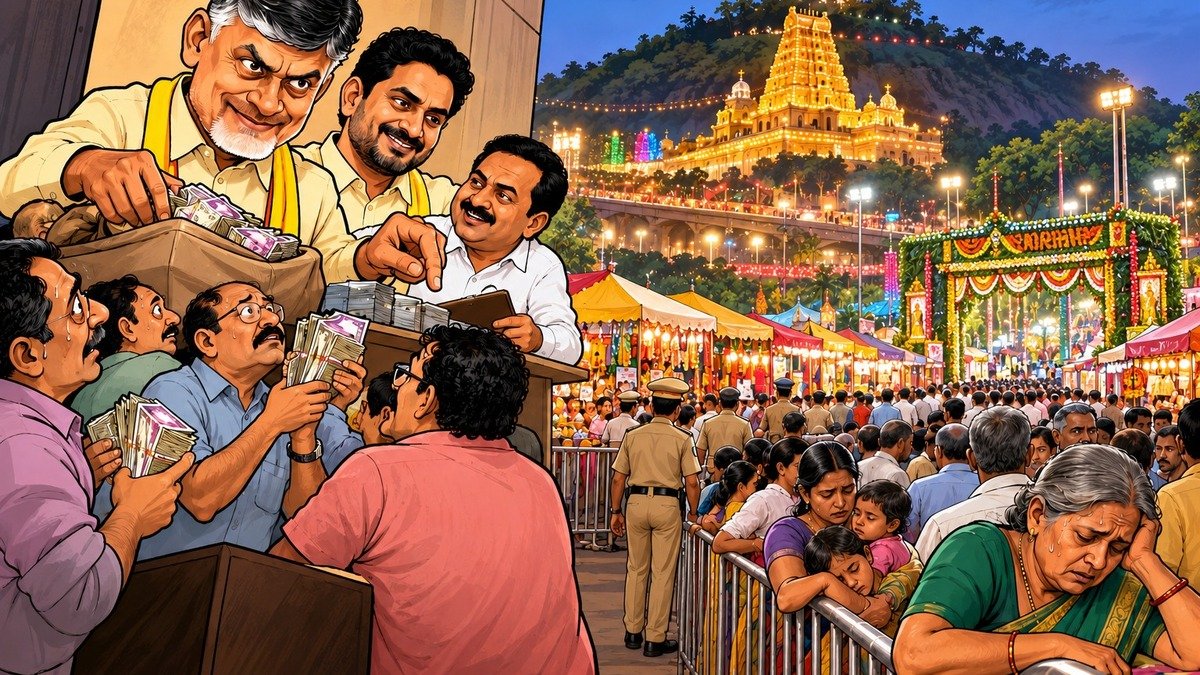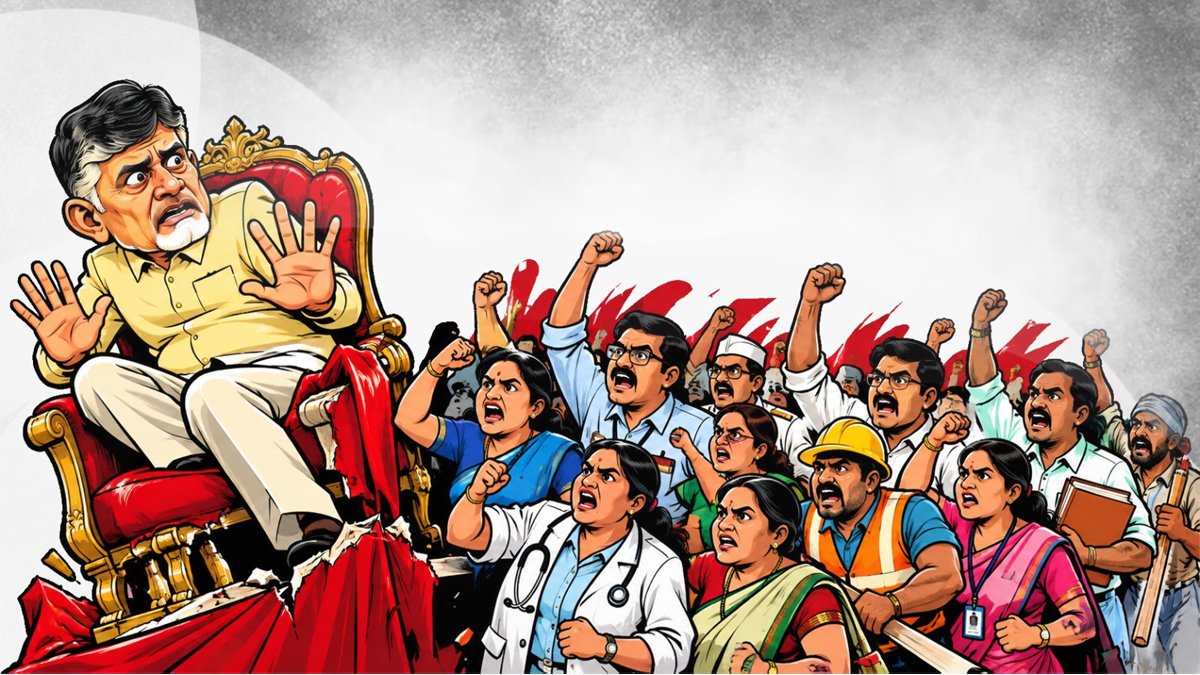
Tadepalli, July 17: The coalition government in Andhra Pradesh has come under criticism for allegedly failing to fulfil its flagship election promises even after completing two years in office and entering its third year. The latest guidelines issued for the ‘Thalliki Vandanam’ scheme have sparked fresh controversy, with nearly 20 lakh students and their mothers expected to be left out of the programme despite assurances made before the elections that every school-going child would receive annual financial assistance.
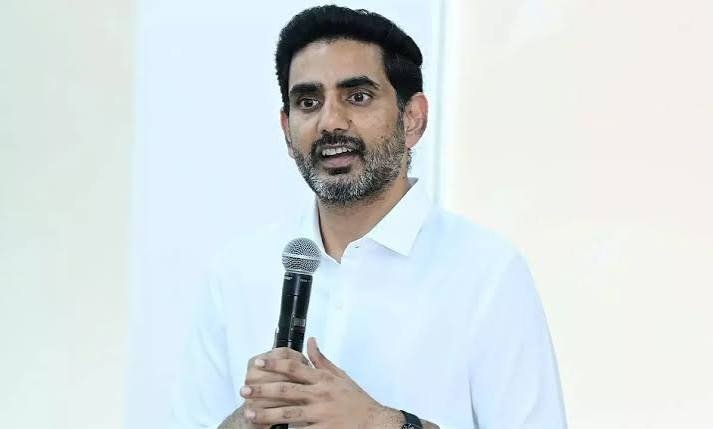
Before the elections, Chief Minister N. Chandrababu Naidu and Minister Nara Lokesh had campaigned extensively, distributing bond certificates and promising Rs.15,000 per year for every school-going child in a family. However, after assuming office, the government introduced multiple eligibility conditions and restrictions. According to UDISE data, Andhra Pradesh has 84.37 lakh students in the 2025-26 academic year. Yet, for the 2026-27 academic year, the government has announced that only 64.76 lakh students will receive assistance, leaving around 20 lakh students outside the scheme.
Critics point out that the scheme was not implemented during the government’s first year in office. In the second year, instead of providing the promised Rs.15,000 per student, beneficiaries reportedly received varying amounts such as Rs.8,000, Rs.9,000, Rs.10,000, Rs.12,000 and Rs.13,000, with deductions made in the name of school maintenance. The administrative sanction of Rs.10,120.78 crore for the current academic year has also raised questions over whether adequate funds have been allocated to cover all eligible students.
Based on the government’s own promise, the total amount payable under Thalliki Vandanam over three academic years should have been Rs.39,338.46 crore. However, only Rs.6,377 crore was reportedly paid last year, while Rs.10,120.78 crore has been sanctioned this year. This leaves pending dues estimated at Rs.22,840.68 crore, prompting questions over when the remaining amount will be released.
The eligibility conditions have also drawn criticism. Families are required to satisfy income limits, possess valid ration cards, remain within prescribed land ownership limits, own no four-wheel vehicles other than tractors and autos, consume less than 300 units of electricity per month, and meet several other conditions relating to property ownership, government employment and income tax status. Critics argue that many poor and lower middle-class families are being excluded because of these restrictions, which were never highlighted during the election campaign.
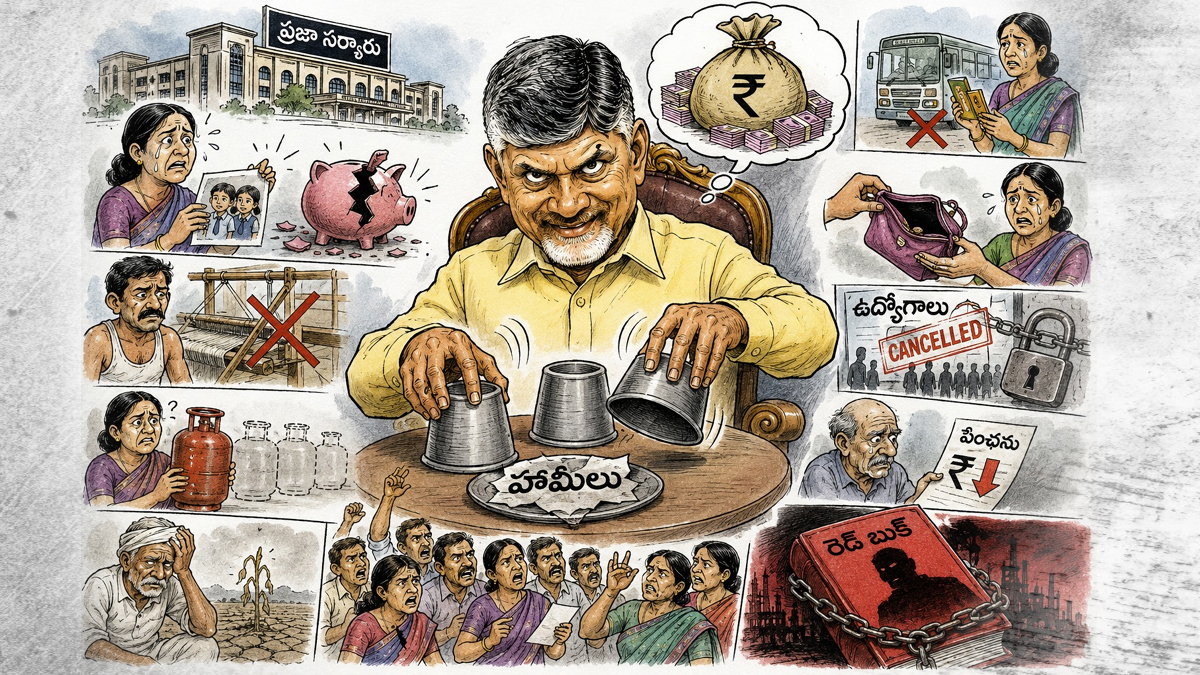
The controversy has also revived debate over the implementation of other promises made under the Super Six programme. The promised Rs.1,500 monthly assistance for every eligible woman above 18 years has not been implemented. The commitment to provide three free LPG cylinders every year has reportedly been limited to one or two cylinders. Similarly, free bus travel for women has been restricted through multiple eligibility conditions.
Questions have also been raised over the implementation of Annadata Sukhibhava, which was not launched in the first year despite election assurances. Under Nethanna Nestham, although around 90,000 weavers are said to be eligible, only about 54,000 beneficiaries have reportedly been covered. The promise of creating 20 lakh jobs also remains unfulfilled, while concerns continue over the reduction of contract and outsourcing employment opportunities.
The government has also faced criticism over pension promises. The assurance of providing pensions to BC, SC, ST and Minority women above the age of 50 has not materialised, while nearly six lakh pensions of elderly persons, widows and persons with disabilities have reportedly been discontinued across the state.
The renaming of the previous Amma Vodi scheme as Thalliki Vandanam has also become a subject of political debate. Critics argue that while the scheme’s name has changed, the number of beneficiaries has been reduced and new restrictions have been imposed. Questions are also being raised over the deduction of Rs.2,000 from the promised assistance and the introduction of eligibility conditions linked to electricity consumption and other household assets.
As the third year of the coalition government’s tenure begins, the implementation of Thalliki Vandanam and other welfare promises continues to generate public debate, with demands for the government to extend the scheme to every eligible student, release the full Rs.15,000 without deductions, clear pending dues from previous years, and reconsider the eligibility criteria that have excluded lakhs of families.