- Chandrababu’s boycott in 2021 versus Jagan’s fight in 2026
- Anantapur Mayor’s post secured despite restrictions and intimidation
- YSRCP registers victories in Nandikotkur, Bethamcherla and Naidupeta
- YSRCP wins 23 wards in Nandikotkur and 18 wards in Bethamcherla
- Impact of the Visakhapatnam Steel Plant movement reflected in YSRCP’s Gajuwaka victory
- Reduced victory margins for the ruling alliance in Visakhapatnam and Vijayawada demonstrate YSRCP’s political fight
- Opposition resists irregularities from nominations to counting
- TDP manipulations during counting in Dhone, Nandyal, Yeleswaram and Giddalur
- YSRCP cadre stands firm against intimidation from Palnadu to Rayalaseema
- Internal differences and rebellion within the ruling coalition come to the fore
- YSRCP confident of taking on all three alliance parties together
- Renewed confidence beyond electoral victories and defeats
The recent local body elections have infused fresh enthusiasm and renewed positivity into YSRCP. In politics, victories and defeats are determined by election results. However, the future of a political party is not decided merely by the number of seats it wins. Equally important are whether the party can return to the people after an electoral defeat, whether its workers are willing to confront the ruling party, and whether its leaders continue their struggle even under adverse circumstances.
Viewed from this perspective, the recent local body elections in Andhra Pradesh have become an important political experience for the YSR Congress Party. Following its defeat in the 2024 general elections, these elections provided an opportunity to overcome the perception that confronting the TDP-Jana Sena-BJP coalition would be difficult.
Although the ruling alliance secured an advantage in municipal results across the state through repression, YSRCP’s victories in the Anantapur Mayor election and the municipal leadership contests in Nandikotkur, Bethamcherla and Naidupeta have encouraged the party cadre. More importantly, contesting elections while out of power and under considerable political pressure provided an opportunity to assess the party’s organisational strength.
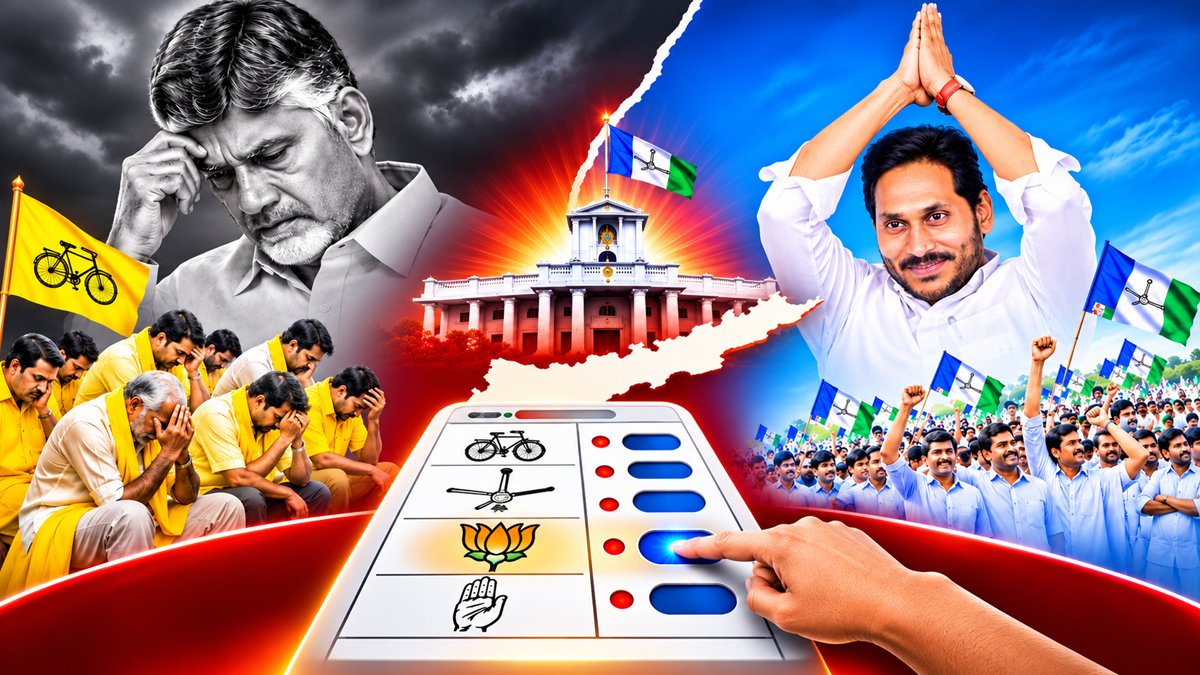
Chandrababu Gave Up in 2021, Jagan Fought in 2026
A look back at the 2021 local body elections, held when YSRCP was in power, reveals the political contrast with the present situation.
At that time, TDP participated in the municipal and local body electoral process. However, while the MPTC and ZPTC election process was underway, and after the process of unanimous elections had concluded, Chandrababu announced on April 2 that his party would boycott those elections.
He abandoned the contest without putting up a fight, leaving his party cadre confused. He cited the lack of democratic conduct in the elections and a loss of confidence in the State Election Commission as reasons for the boycott. Even some senior TDP leaders expressed dissatisfaction with the decision. It also affected the morale of party workers who were already in the electoral fray.
In contrast, the manner in which YS Jagan confronted the 2026 local elections has become a subject of political discussion. Despite obstacles from the nomination stage, the party refused to retreat.
Regardless of the atrocities, intimidation and attacks carried out by TDP groups, YSRCP remained in the electoral battle without boycotting the elections. The party continued fielding candidates, making efforts to protect them, appointing polling agents, raising objections at counting centres and submitting complaints to the State Election Commission at every stage.
In several areas, candidates, leaders and party workers actively participated in the electoral process. Political analysts believe that, compared with TDP’s decision to boycott the 2021 elections after raising objections to the electoral process, YSRCP’s decision to continue fighting in 2026 is an inspiring example.
Anantapur Mayor’s Post: A Significant Victory Under Adverse Circumstances
The victory of YSRCP candidate B.C. Ramesh Goud as Mayor of the Anantapur Municipal Corporation was one of the party’s major achievements in these elections. He defeated BJP candidate Ajesh Babu by a majority of 5,981 votes. Of the 62 divisions, YSRCP won 21 seats, while TDP secured 30, Jana Sena won six and BJP won one division. Although the ruling coalition secured an advantage in the division-level contests, the victory of the YSRCP candidate in the direct mayoral election assumes political significance. With ruling coalition mayoral candidates securing leads in other corporations across the state, the Anantapur result provided particular encouragement to YSRCP.
YSRCP Demonstrates Its Strength in Nandikotkur
In Nandikotkur of Nandyal district, YSRCP candidate Fathima Bee won the municipal chairperson election by a majority of 2,620 votes. She secured 14,619 votes, while TDP candidate Saberunnisa received 11,999 votes. Of the 32 wards, YSRCP won 23, restricting TDP to nine seats. The clear advantage secured by YSRCP in both the chairperson election and ward-level contests demonstrated the party’s organisational strength at the grassroots level in Nandikotkur.
Victory in Bethamcherla as Well
In Bethamcherla Nagar Panchayat of Nandyal district, YSRCP chairperson candidate Dudekula Dastagiri won by a majority of 1,502 votes. Of the 28 wards, YSRCP secured 18, while TDP won 10 seats. Although tensions prevailed for some time over demands for recounting, YSRCP’s victory was eventually recorded. Similarly, in Naidupeta of Tirupati district, YSRCP candidate Tambireddy Rajeswaramma was elected chairperson with a majority of 1,187 votes.
Five-Lakh Majority in 2024, Now Two-and-a-Half Lakh in Visakhapatnam
The results in Visakhapatnam have triggered political discussion when compared with the 2024 general elections. In the 2024 Lok Sabha elections, TDP candidate M. Sribharat won with a majority of 5,04,247 votes. In the recent Greater Visakhapatnam mayoral election, ruling coalition candidate Mukka Sravani secured a majority of 2,44,644 votes over YSRCP candidate Varudu Kalyani. Political analysts have appreciated the manner in which YSRCP returned to the electoral contest in Visakhapatnam after 2024. Of the 120 wards in the corporation, the ruling coalition won 98, while YSRCP secured 13 seats. Analyses suggest that YSRCP succeeded in remaining in the contest, conducting its election campaign and reaching households across the city.
Impact of Visakhapatnam Steel Plant Movement: Victory in Gajuwaka
The Visakhapatnam Steel Plant and issues concerning its workers assumed political importance during these elections. YSRCP prominently raised concerns about the future of the steel plant, protection of workers’ interests and opposition to privatisation during its election campaign. In Gajuwaka’s 99th ward, YSRCP candidate Komati Srinivasa Rao won by a majority of 3,442 votes. This victory has become an example of how workers’ issues influenced elections in areas closely associated with the steel industry. YSRCP’s victory in Gajuwaka has infused fresh enthusiasm into the party.
Reduced Majority for the Ruling Alliance Candidate in Vijayawada
In the Vijayawada mayoral election, Jana Sena candidate Vangaveeti Radhakrishna won with a majority of 1,30,872 votes. He secured 2,65,888 votes, while YSRCP candidate Rayana Bhagyalakshmi received 1,35,016 votes. In the 2024 Vijayawada Lok Sabha election, TDP candidate Kesineni Sivanath won by a majority of 2,82,085 votes. Political analysts argue that the reduced victory margin of the ruling coalition candidate indicates YSRCP’s recovery since the Lok Sabha elections. The votes secured by YSRCP and the wards it won in Vijayawada are being cited as evidence that the party is strengthening its local presence.
Restrictions Began at the Nomination Stage
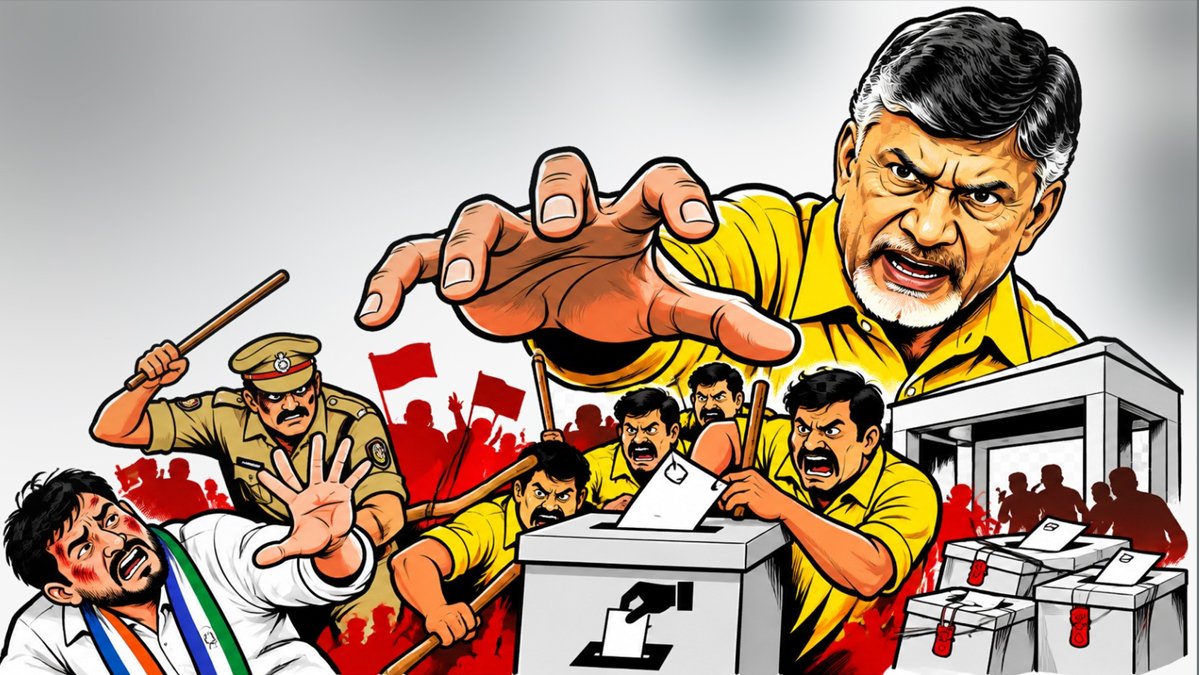
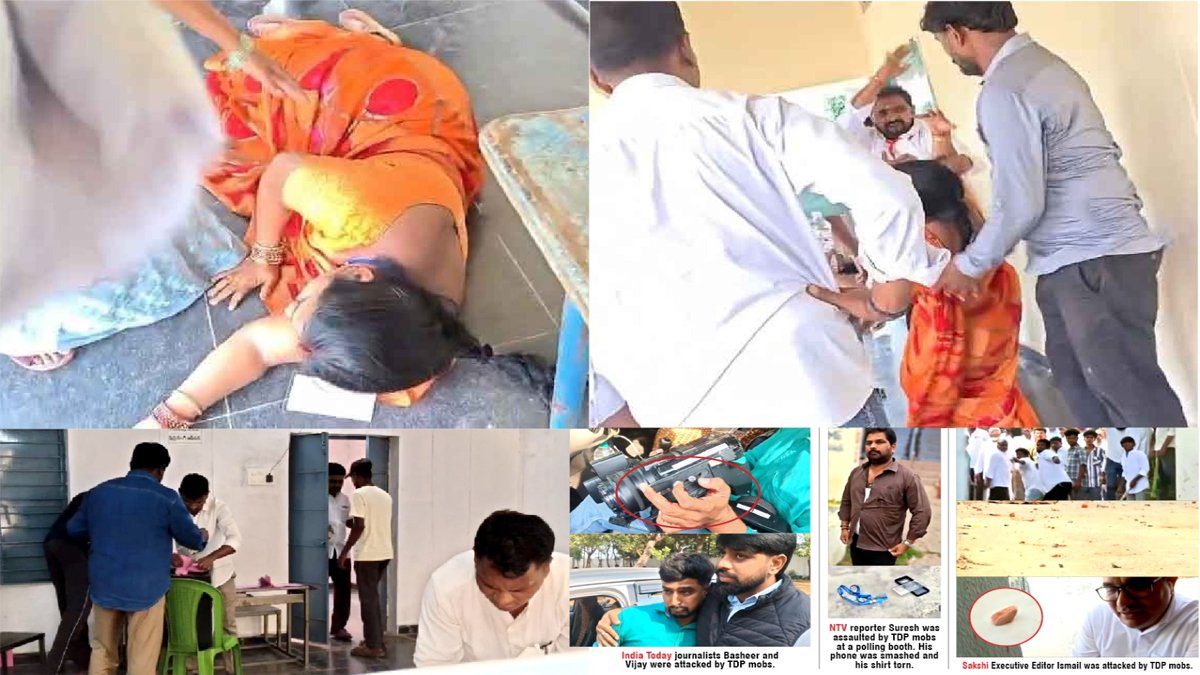
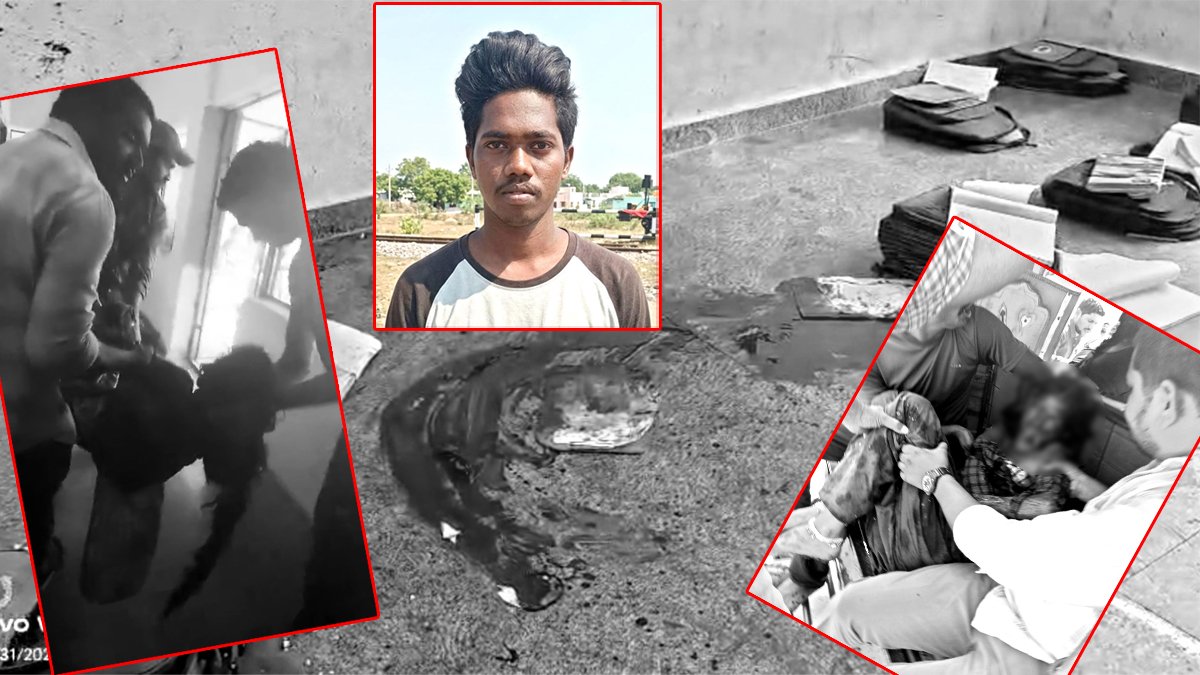
One of the principal issues raised by YSRCP during these elections was the series of irregularities committed throughout the electoral process. The party brought forward evidence of candidates being prevented from filing nominations, intimidation, nomination papers being torn, B-Forms going missing and withdrawals being carried out through forged signatures. It also presented evidence that, in certain areas, individuals favourable to the ruling coalition filed nominations in YSRCP’s name and subsequently withdrew them. Candidates belonging to Communist parties also faced obstacles. TDP’s intimidation of polling agents continued in Pulivendula, Macherla, Vinukonda, Chilakaluripet, Kadapa, Madanapalle and several other areas. Candidates were physically attacked. With police assistance, ruling party activists hijacked the electoral process.
Atrocities During Counting and Manipulation of Results
TDP’s intimidation and misconduct did not end with nominations and polling. They continued during vote counting in several areas. Numerous examples emerged of irregularities at counting centres. Discrepancies in vote counts, refusal to consider recounting requests and rejection of objections raised by polling agents were reported across the state. YSRCP particularly raised doubts about the results of municipal chairperson elections in Dhone, Nandyal, Yeleswaram and Giddalur. The party questioned the counting procedure in Dhone, objected to the declaration of results in Yeleswaram, raised concerns about the counting process in Nandyal and criticised the conduct of election officials in Giddalur. Objections were also raised regarding the counting of votes in Kadapa’s 33rd ward. TDP’s intimidation continued during recounting in Anantapur as well. Such allegations concerning the counting process have increased public doubts about the integrity of the electoral system.
Struggle Across Greater Rayalaseema and Resistance in Palnadu
Some of the most serious incidents involving TDP intimidation during these elections emerged in Greater Rayalaseema and Palnadu. YSRCP highlighted the difficulties faced by its candidates and polling agents in several areas across Kadapa, Kurnool, Nandyal, Anantapur and Chittoor districts. The party submitted complaints supported by evidence regarding incidents in Vinukonda, Macherla and Chilakaluripet of Palnadu district. Political analysts say that the victories secured by YSRCP in Nandikotkur, Bethamcherla and Anantapur under these circumstances have generated particular enthusiasm among party workers. The ruling alliance had the support of the entire administrative machinery. Despite adverse conditions throughout the electoral process, YSRCP’s ability to secure victories in certain areas is being viewed as a testament to the efforts of its grassroots workers.
YSRCP Refused to Retreat in the Face of Intimidation
Political analyses suggest that the ruling coalition had anticipated the possibility of YSRCP securing a significant number of seats across Palnadu and Greater Rayalaseema. Accordingly, it is being suggested that severe restrictions and intimidation were imposed in certain areas. Questions remain unanswered regarding the lack of equal opportunities for opposition candidates, obstacles to filing nominations, entry of polling agents, redressal of election complaints and transparency in vote counting.
Internal Differences Within the Coalition and the Impact of Rebel Candidates
Although TDP, Jana Sena and BJP contested the elections together, coordination problems between the three parties became evident in certain areas. In Adoni, a Jana Sena rebel candidate defeated the official BJP candidate. Similarly, in Nellimarla, another rebel candidate emerged victorious against the ruling coalition’s official nominee. These developments exposed internal differences within the coalition, even as the alliance secured an overall advantage in the statewide election results through irregularities and intimidation. Although the leadership of all three parties shares a common political platform at the state level, analyses suggest that the same level of coordination does not always exist among their workers at the village and town levels. There is also a growing view that YSRCP is politically capitalising on the differences emerging within the coalition.
Illusion of Coalition Strength: A Challenge to Political Psychological Dominance
In politics, the perception of an opponent’s strength is as important as actual public support. In political terminology, this is known as the perception of power. When three parties are together in government, opposition parties may develop the impression that confronting them would be difficult. Administrative machinery, political resources and organisational structures can further strengthen such perceptions. A similar situation emerged in Andhra Pradesh following the massive victory of the TDP-Jana Sena-BJP coalition in the 2024 elections. However, the local body elections provided YSRCP workers with an opportunity to participate in electoral competition once again. The party cadre gained the experience of fielding candidates and contesting elections despite being out of power and confronting a ruling coalition with considerable strength. These elections became an important part of the opposition party’s efforts to rebuild its organisational capabilities.
An Opportunity to Overcome the Disappointment of 2024
Maintaining the confidence of party workers after an electoral defeat is a major challenge for any political party. This is particularly true when a party moves from government to opposition, requiring its leadership and workers to adapt to a new political environment. Maintaining local relationships with the public, participating in party activities and encouraging candidates become even more important. YSRCP faced precisely this situation after 2024. The recent local body elections gave the party an opportunity to confront that challenge directly. Although the party suffered defeats in several areas, victories in certain towns enabled local leaders to generate renewed enthusiasm among their workers. Candidates who contested the elections, party workers who campaigned for them and the organisational machinery that remained active until counting gained valuable experience for future political activities.
Foundation for Confidence in Returning to Power
For a political party to recover after defeat, decisions taken at the leadership level alone are insufficient. Workers must remain active in villages, wards and towns. The party must continuously raise public issues and strengthen its ability to confront political challenges. Viewed from this perspective, YSRCP has an opportunity to use the local body elections as part of its organisational rebuilding process. While victories in Anantapur, Nandikotkur, Bethamcherla and Naidupeta have encouraged the party, it must also analyse the votes secured by candidates in areas where it lost, identify organisational weaknesses and evaluate its campaign strategies. The willingness of party workers to contest elections and the victories achieved in certain areas are being described as particularly encouraging developments for YSRCP’s organisational leadership.
The Message Beyond Electoral Victories and Defeats
The TDP-Jana Sena-BJP coalition secured a substantial advantage in the local body election results. At the same time, YSRCP won the Anantapur Mayor’s post along with three municipal leadership positions. Incidents of violence, allegations concerning nominations and controversies during counting became subjects of political debate throughout the elections. While TDP, when in opposition in 2021, boycotted the MPTC and ZPTC elections, YSRCP, as the opposition party in 2026, confronted the electoral process and remained in the contest until the very end. Contesting elections while out of power, securing victories in certain areas and bringing party workers back into active electoral participation were the principal organisational benefits YSRCP gained from these elections. A single election may not entirely determine the future of a political party. However, every election provides an opportunity to understand its strengths and weaknesses. From that perspective, the 2026 local body elections have provided YSRCP with an opportunity to test the confidence of its cadre, assess public support and strengthen the organisational foundations required for its future political struggle.