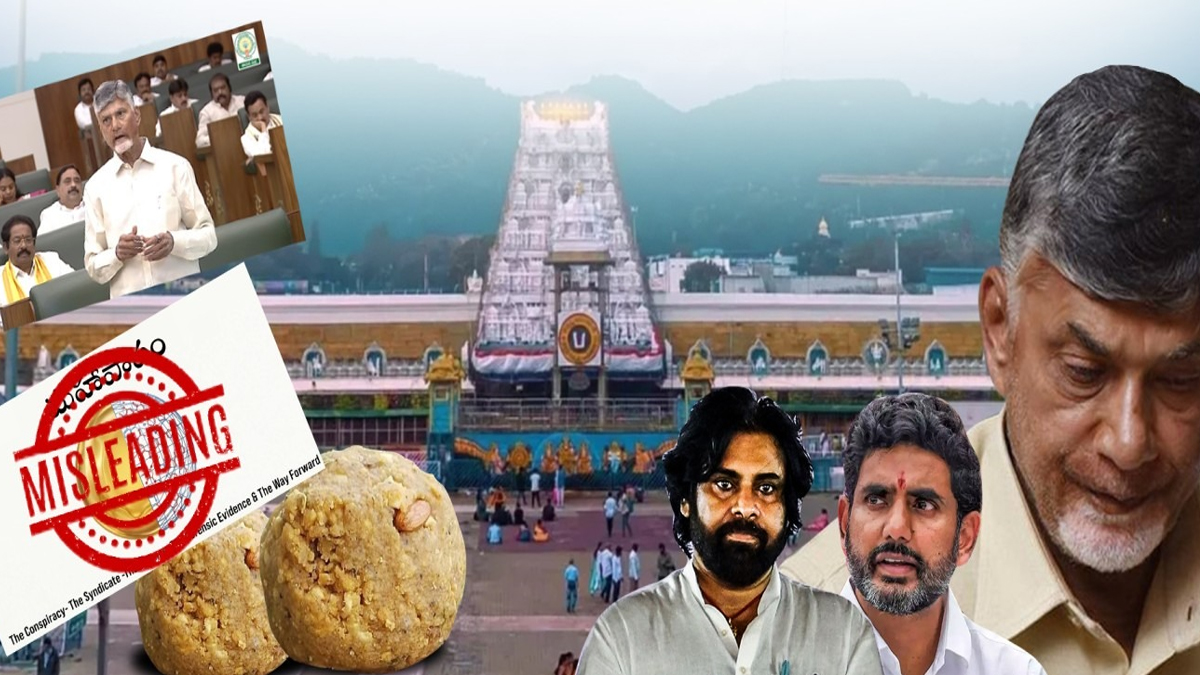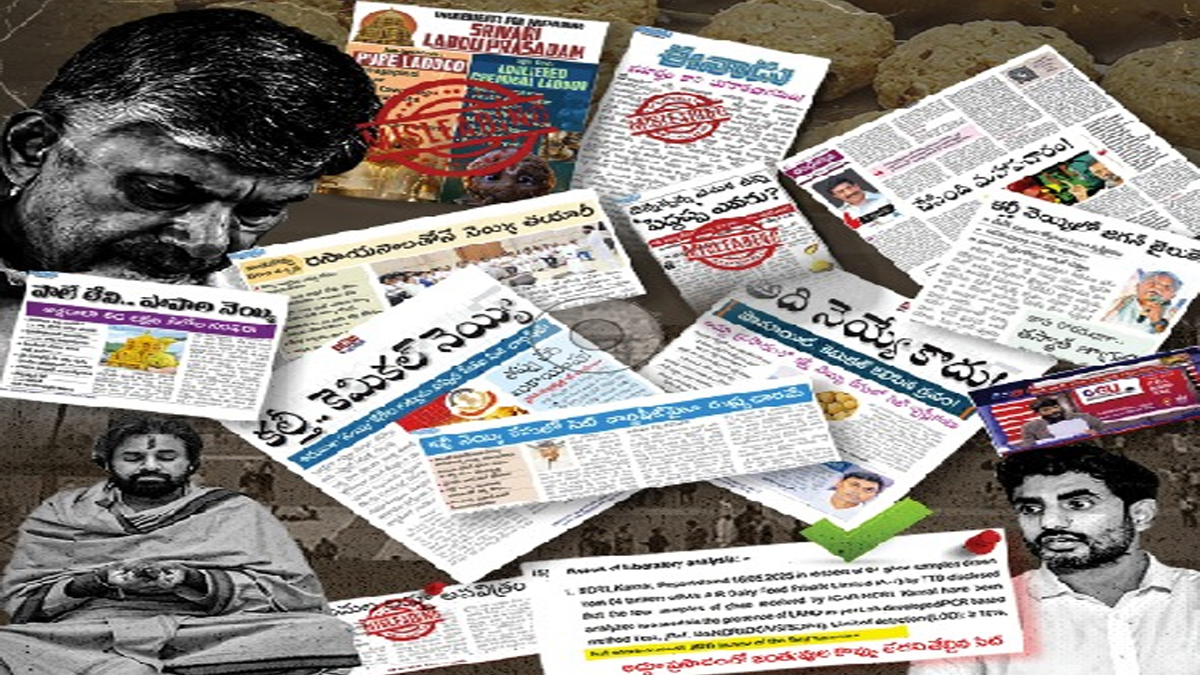
Chief Minister Chandrababu Naidu, who initiated allegations that adulterated ghee was used in the preparation of the sacred Tirumala laddu prasadam, now finds himself under intense scrutiny as official investigation reports contradict his claims. The NDDB, NDRI, and the CBI-SIT charge sheet have clearly stated that no animal fat was found in the ghee used for laddu preparation. Despite this, the Chief Minister and coalition leaders continue to repeat allegations of adulteration in the Assembly, while key questions remain unanswered regarding tender decisions, supplier qualifications, and pricing escalations.
⸻
Assembly Speech: Key Questions Avoided
During his recent speech in the Assembly, Chandrababu Naidu avoided responding to crucial issues raised by the opposition. The disqualification and later reinstatement of Bhole Baba Dairy occurred during his tenure. Four ghee tankers rejected by TTD laboratories were also cleared and re-entered TTD during his government. Those same tankers were allegedly used in laddu preparation under his administration.
Further, serious questions have been raised about Indapur Dairy, which earlier supplied ghee at ₹320 per kg but was later awarded tenders at ₹658 per kg. No clear explanation has been offered for this sharp escalation.
⸻
Timeline of Events as Per CBI Charge Sheet
The CBI charge sheet lays out the following sequence:
• March 16, 2024: Election Code of Conduct came into force.
• May 13, 2024: Polling took place.
• May 15, 2024: Tenders were finalized; AR Dairy secured the contract.
• June 4, 2024: Election results were declared.
• June 12, 2024: AR Dairy began ghee supply.
TTD protocol mandates that ghee tankers must first pass FSSAI-authorized laboratory testing and then TTD’s internal lab verification before being cleared for laddu preparation. If samples fail, they are rejected and returned.
Between 2014–2019, 12 tankers were rejected.
Between 2019–2024, 18 tankers were rejected.
On July 6, 2024, four tankers failed TTD lab tests and were rejected. On July 23, 2024, the NDDB report was issued. The rejected tankers were reportedly parked at Srikalahasti and later re-entered TTD in August and September 2024 without objection. These events occurred under the coalition government. The charge sheet (Pages 44, 64, and 91) documents these facts.
⸻
NDDB Report: Selective Interpretation?
The Chief Minister stated that he spoke only after reviewing the NDDB report. However, the report itself contains disclaimers indicating that certain findings may vary under specific conditions and should not be used for legal proceedings without further confirmation.
The Supreme Court also questioned the delay between the July report and the September public announcement, emphasizing that statements capable of hurting the sentiments of millions of devotees must be made responsibly.
The CBI-SIT charge sheet (Page 29) clearly states that no animal fat was found in the ghee used for laddu preparation. NDDB (Page 211) and NDRI findings reiterate this position. Yet, allegations of animal fat contamination continued in the Assembly.
⸻
Indapur–Heritage Link and Tender Escalation
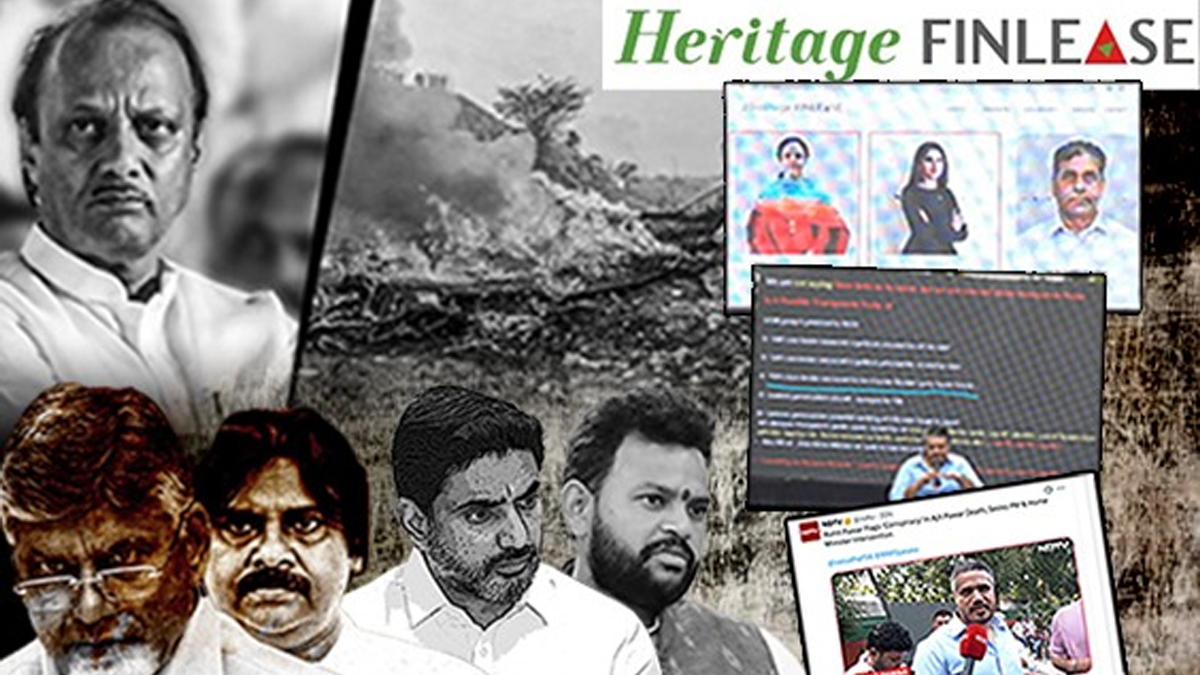
On February 10, 2026, Heritage’s official website listed Indapur Dairy as its manufacturing plant. Within five days, it was modified to “co-manufacturing plant.” On February 24, 2026, Heritage’s National Sales Head and Vice President resigned. These developments have raised further questions.
Historically:
• In 2016, Indapur Dairy was disqualified after failing lab tests but was re-qualified within three months and allowed to bid again.
• On November 27, 2018, Indapur secured a contract at ₹321 per kg.
• On December 16, 2025, after Chandrababu returned to power, Indapur reportedly secured a tender at ₹658 per kg.
This represents more than double the earlier rate. The TTD Purchasing Committee acknowledged that contract conditions were modified. Questions remain as to why and how these changes were introduced.
⸻
Bhole Baba and Premier Dairies
Records show:
• June 26, 2018: Bhole Baba Dairy received technical qualification during Chandrababu’s previous tenure.
• March 6, 2019: An order for 82,000 kg of ghee was awarded to Bhole Baba under his government.
Premier Agri Foods supplied nearly 90% of ghee between 2013 and 2019 under his administration. Despite being named in the CBI-SIT charge sheet, Premier was permitted to participate in tenders after he resumed office. Questions remain about the absence of extended investigation into these suppliers.
⸻
Vaishnavi and Sangam Dairy Links
The CBI charge sheet names Vaishnavi Dairy as an accused entity. Allegations point to operational and logistical links between Vaishnavi and Sangam Dairy. These connections, critics argue, have not been thoroughly examined.
⸻
Tender Process and Pricing Questions
Chandrababu’s earlier tenure saw suppliers quoting between ₹270 and ₹320 per kg. After his return to office, rates reportedly escalated to ₹658 per kg. Critics argue that such a dramatic increase demands transparent explanation.
Key unanswered questions include:
• Why were rejected tankers allowed to re-enter TTD?
• Why was Indapur re-qualified within three months of disqualification?
• Why were tender conditions altered?
• Why were certain suppliers investigated while others were not?
⸻
Political Diversion vs Administrative Accountability
Opposition leaders contend that instead of addressing the findings of the CBI-SIT and clarifying tender decisions, the Chief Minister chose to divert the debate by targeting political opponents and families in the Assembly.
The controversy, which began as an allegation of adulteration in sacred prasadam, has now shifted toward issues of administrative accountability, procurement transparency, and possible commercial interests.
With official reports clearly stating that no animal fat was found in the ghee used for Tirumala laddu preparation, the focus remains on whether the government will answer the pending questions regarding supplier selection, tender modifications, and pricing decisions.