What was once a harvest festival of family gatherings and tradition has, under the present government, turned into a season of liquor-driven profiteering. The Sankranti period witnessed a flood of alcohol across Andhra Pradesh, steep price hikes, illegal collections, and policy decisions that weakened the state’s revenues while burdening ordinary citizens. The government that promised to reduce liquor prices has instead presided over record sales, inflated rates, mushrooming belt shops, and a system where liquor consumers paid more, while the exchequer lost thousands of crores.
From election promise to price hikes
Before the elections, Chandrababu Naidu repeatedly promised village after village that liquor prices would be reduced. After coming to power, those promises vanished. On January 8, the cabinet decided to increase liquor prices by Rs. 10 per bottle, and a formal Government Order was issued on January 13. But liquor shops and bars across the state began collecting higher prices from January 8 itself — four days before the GO. The official hike was Rs. 10, but shop owners allegedly added another Rs. 10 to Rs. 20, forcing people to pay up to Rs. 30 extra per bottle. The excise department remained silent. For daily wage workers, drivers, small shop employees and rural consumers, this was not a policy change, it was a sudden shock to household spending.
Illegal collections
Even before the government order came into force, increased prices were already being collected across shops and bars. With political backing, the illegal hike continued unchecked. For four days, liquor consumers were paying higher prices without any legal sanction. For many families, Sankranti shopping money quietly drained into liquor counters.
Rs. 5 cr a day from Consumers’ Pockets
Andhra Pradesh has 3,636 liquor shops and 540 bars. Around six lakh cases of liquor are sold every month. Daily sales are estimated at nearly Rs. 100 crore. With an unofficial Rs. 10 per bottle collection alone, about Rs. 5 crore per day was allegedly being extracted. In just four days, nearly Rs. 20 crore was reportedly collected illegally. To cash in on the festive rush, belt shops reportedly increased prices even further. Nearly 75,000 belt shops were openly set up across villages, towns and highways. For many neighbourhoods, Sankranti nights were no longer about bonfires and family meals, but queues at illegal liquor counters.
Political Collections
Public representatives demanded payments, arguing that since the government approved the price hike, commissions had to follow. The syndicate reportedly collected Rs. 50,000 from each liquor shop and Rs. 2 lakh from each bar. This works out to about Rs. 18.18 crore from shops and Rs. 10.80 crore from bars, passed on as festival “collections” to coalition leaders. For ordinary citizens, this meant one thing: higher prices at the counter and quiet transfers at the top.
Flood of Liquor
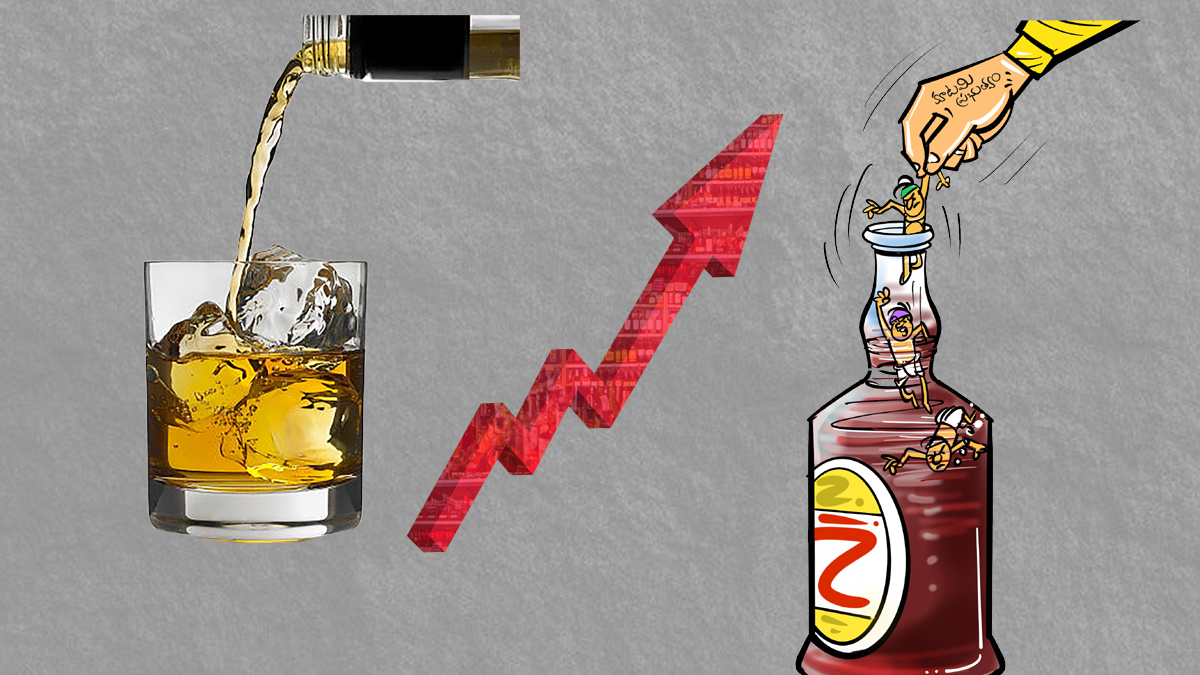
The numbers tell their own story. Between January 1 and January 17, liquor worth Rs. 1,797.57 crore was sold in Andhra Pradesh. This included 24.64 lakh cases of liquor and 11.36 lakh cases of beer. During the same period last year, sales stood at Rs. 1,531.18 crore. In just 17 days, sales increased by Rs. 266.39 crore. Excise officials estimate total sales may cross Rs. 3,000 crore by the end of the month. While families struggled with rising prices, the state witnessed one of the highest festive liquor booms in its history.
Tax cuts for bars, burden for people
Even as liquor prices were raised on consumers, the government abolished the 15% Additional Retail Excise Tax (ARET) on liquor supplied to bars. The government itself admitted this would cause a loss of Rs. 340 crore per year to the exchequer. Excise department sources say the real loss could be closer to Rs. 500 crore annually, nearly Rs. 2,000 crore over four years. This meant a double blow: people paid more for every bottle, while the government gave up a major revenue stream.
The past case: In 2015, the then government scrapped the Privilege Fee through two GOs, causing an estimated loss of Rs. 5,200 crore over four years. The CID later registered cases against Chandrababu Naidu, former excise minister Kollu Ravindra and others under IPC and Prevention of Corruption Act sections. Chandrababu Naidu spent nearly three years on bail in that case. After returning to power in 2024, the government ensured the case was closed. The former Beverages Corporation MD who had complained was allegedly harassed, cases were filed against him, and the CID later informed the court there was no evidence. With the recent removal of ARET, critics say the same pattern is repeating.
A festival left people drained : For many households, Sankranti 2026 did not end with savings, sweets or celebrations. It ended with inflated liquor bills, easy access through belt shops, and a sense that the system worked against the common person. Prices went up, illegal collections flourished, taxes that supported the exchequer were removed, and liquor sales shattered records. This was not merely a festive spike in consumption. It was a policy environment that turned a cultural festival into a season of extraction, where ordinary people paid more, and the state quietly lost more.
Sankranti turned into Gambling and Liquor carnival
What was once a harvest festival of family gatherings and tradition has, under the present government, turned into a season of liquor-driven profiteering. The Sankranti period witnessed a flood of alcohol across Andhra Pradesh, steep price hikes, illegal collections, and policy decisions that weakened the state’s revenues while burdening ordinary citizens. The government that promised to reduce liquor prices has instead presided over record sales, inflated rates, mushrooming belt shops, and a system where liquor consumers paid more, while the exchequer lost thousands of crores.
From election promise to price hikes
Before the elections, Chandrababu Naidu repeatedly promised village after village that liquor prices would be reduced. After coming to power, those promises vanished. On January 8, the cabinet decided to increase liquor prices by Rs. 10 per bottle, and a formal Government Order was issued on January 13. But liquor shops and bars across the state began collecting higher prices from January 8 itself — four days before the GO. The official hike was Rs. 10, but shop owners allegedly added another Rs. 10 to Rs. 20, forcing people to pay up to Rs. 30 extra per bottle. The excise department remained silent. For daily wage workers, drivers, small shop employees and rural consumers, this was not a policy change, it was a sudden shock to household spending.
Illegal collections
Even before the government order came into force, increased prices were already being collected across shops and bars. With political backing, the illegal hike continued unchecked. For four days, liquor consumers were paying higher prices without any legal sanction. For many families, Sankranti shopping money quietly drained into liquor counters.
Rs. 5 cr a day from Consumers’ Pockets
Andhra Pradesh has 3,636 liquor shops and 540 bars. Around six lakh cases of liquor are sold every month. Daily sales are estimated at nearly Rs. 100 crore. With an unofficial Rs. 10 per bottle collection alone, about Rs. 5 crore per day was allegedly being extracted. In just four days, nearly Rs. 20 crore was reportedly collected illegally. To cash in on the festive rush, belt shops reportedly increased prices even further. Nearly 75,000 belt shops were openly set up across villages, towns and highways. For many neighbourhoods, Sankranti nights were no longer about bonfires and family meals, but queues at illegal liquor counters.
Political Collections
Public representatives demanded payments, arguing that since the government approved the price hike, commissions had to follow. The syndicate reportedly collected Rs. 50,000 from each liquor shop and Rs. 2 lakh from each bar. This works out to about Rs. 18.18 crore from shops and Rs. 10.80 crore from bars, passed on as festival “collections” to coalition leaders. For ordinary citizens, this meant one thing: higher prices at the counter and quiet transfers at the top.
Flood of Liquor
The numbers tell their own story. Between January 1 and January 17, liquor worth Rs. 1,797.57 crore was sold in Andhra Pradesh. This included 24.64 lakh cases of liquor and 11.36 lakh cases of beer. During the same period last year, sales stood at Rs. 1,531.18 crore. In just 17 days, sales increased by Rs. 266.39 crore. Excise officials estimate total sales may cross Rs. 3,000 crore by the end of the month. While families struggled with rising prices, the state witnessed one of the highest festive liquor booms in its history.
Tax cuts for bars, burden for people
Even as liquor prices were raised on consumers, the government abolished the 15% Additional Retail Excise Tax (ARET) on liquor supplied to bars. The government itself admitted this would cause a loss of Rs. 340 crore per year to the exchequer. Excise department sources say the real loss could be closer to Rs. 500 crore annually, nearly Rs. 2,000 crore over four years. This meant a double blow: people paid more for every bottle, while the government gave up a major revenue stream.