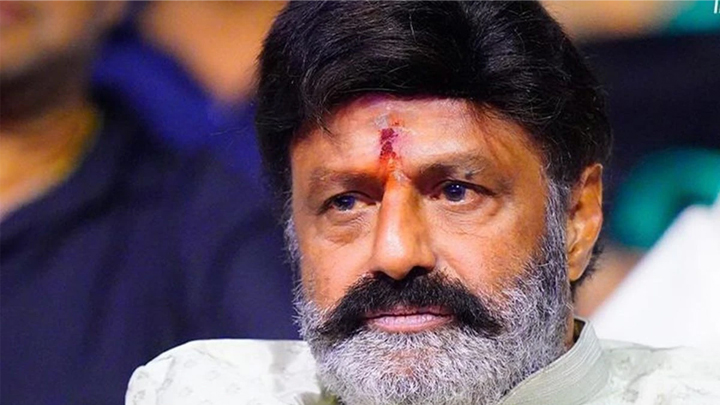
Hindupur MLA and film actor Nandamuri Balakrishna is once again in the eye of a storm, this time for his derogatory remarks in the Andhra Pradesh Assembly targeting former Chief Minister Y.S. Jagan Mohan Reddy and film icon Chiranjeevi. What should have been a dignified debate degenerated into an outburst, with Balakrishna’s language described by many as more befitting a “street rowdy” than an elected representative.
A Pattern of Aggression
This is not the first time Balakrishna’s temper and reckless speech have made headlines. He has repeatedly lashed out at fans, colleagues, and women co-stars in crude or inappropriate ways. At public functions, he has been filmed making misogynistic comments such as “if I see a girl, I must kiss her.” In 2023, Tamil actress Vichithra accused Balakrishna of harassment during a film shoot, alleging that he tried to force her into his hotel room and even banged on her door at night when she refused.
The 2004 Shooting Scandal
Balakrishna’s darkest moment came in June 2004, when he allegedly opened fire at producer Bellamkonda Suresh and astrologer Satyanarayana Chowdhary inside his Jubilee Hills residence. Both were seriously injured and rushed to Apollo Hospital. Balakrishna was arrested, but in a dramatic twist, he was transferred to NIMS hospital under claims of “mental instability.” Reports at the time suggested he escaped punishment by producing a “mental certificate,” shielding him from prison. Critics argue that since then, his erratic behavior in public life has only continued.
Attacks on Chiranjeevi and Jagan
In the latest Assembly episode, Balakrishna mocked Chiranjeevi by referring to him dismissively as “vaadu” (that fellow) and accused Jagan Mohan Reddy of insulting film stars when he was Chief Minister. The irony, as Chiranjeevi himself clarified, is that Jagan had in fact invited him and other industry representatives for lunch and even revised film ticket prices, benefitting films like Veerasimha Reddy and Waltair Veerayya. “I was never insulted,” Chiranjeevi stated, thereby exposing the false narrative being peddled by Balakrishna and TDP allies.
Observers note that Balakrishna’s hostility towards Chiranjeevi is not new. In the past, he ridiculed PRP and Jana Sena workers, sometimes referring to them as “mixed breeds” or “worthless people.” In one infamous incident during a TDP program, Chiranjeevi was left standing while Balakrishna and Chandrababu Naidu occupied the front row—seen as a deliberate humiliation. Even Chiranjeevi’s mother was targeted by derogatory comments from TDP cadres, showing a sustained pattern of disrespect.
Fan War Legacy
The confrontation is also rooted in the long-running fan wars between the Nandamuri (NTR/Balakrishna) camp and the Konidela (Chiranjeevi/Pawan) camp. For decades, these rival fandoms have not only clashed on cinema grounds but also spilled into politics, often reflecting caste and community undercurrents. Every insult on one side is amplified by fan associations, deepening divisions that political parties have sometimes exploited.
NTR Heirship Question
Although Balakrishna is NTR’s son and a three-time MLA, he has never been considered seriously as TDP president or projected as a CM face. Within the party, Chandrababu Naidu consolidated power, and his son Nara Lokesh has been groomed as the future leader. This left Balakrishna in an ambiguous space—revered as NTR’s heir on screen, but sidelined in political succession.
Coalition Optics
The situation looks starker in today’s coalition politics. Pawan Kalyan, Chiranjeevi’s younger brother, enjoys the Deputy Chief Minister’s chair with powerful portfolios—giving the Konidela family real political heft. In contrast, Balakrishna, despite his seniority and star status, has not been given a ministerial berth. Party insiders and political analysts see him as useful for crowds and campaigns, but not as a policymaker.
Status Contest
This Assembly clash, therefore, is not merely about words. It reflects Balakrishna’s status anxiety—watching Chiranjeevi treated with statesmanlike respect, while his brother Pawan Kalyan holds real power in government. In contrast, Balakrishna is left out of the decision-making core, raising questions about his relevance beyond fanfare. Every time he lashes out, it only reinforces the perception that he is driven more by insecurity than by leadership.
The Bigger Picture
For Chiranjeevi, his dignified clarification and restrained tone only reinforced his image as a statesman, in sharp contrast to Balakrishna’s rash behavior. For YSRCP, the episode has become a rallying point to showcase Jagan’s past respect for the film industry versus the coalition’s current theatrics.
In the end, the clash is no longer just about cinema egos. It is about legacy, political hierarchy, and public decency. And on that stage, Balakrishna finds himself overshadowed by his own son-in-law in TDP, by Pawan Kalyan in the cabinet, and by Chiranjeevi in public esteem.